Workplace Safety Compliance for Seattle and Washington Employers
Josh Harris | June 6, 2026
Workplace safety compliance in Seattle and across Washington State is more than a federal OSHA obligation. Washington operates its own occupational safety enforcement system, with requirements that go beyond the federal baseline and apply to virtually every employer in the state. Facility managers and business owners who treat compliance as a box-checking exercise often find themselves exposed when an inspection, incident, or injury brings their program under scrutiny.
This guide explains the Washington-specific framework, the core employer obligations it creates, the industries that face the most intensive regulatory oversight, and the role professional security personnel play in a workplace safety program.
The Washington safety framework: WISHA, DOSH, and L&I
Washington is one of approximately 22 State Plan states, meaning it runs its own occupational safety program under federal OSHA authorization rather than being directly regulated by federal OSHA. The governing law is WISHA (the Washington Industrial Safety and Health Act), administered by L&I (Washington Department of Labor and Industries) through its Division of Occupational Safety and Health (DOSH).
DOSH functions as Washington's equivalent of federal OSHA. It writes and enforces the Washington Administrative Code (WAC) rules that govern workplace safety, conducts inspections, investigates serious injuries and fatalities, and issues citations. Federal OSHA retains oversight of Washington's State Plan program to ensure it is "at least as effective" as federal standards, but on-the-ground enforcement is handled by DOSH.
For employers, this distinction matters. WISHA rules under the WAC sometimes go beyond federal OSHA standards in areas like agricultural safety, healthcare workplace violence, and chemical hazard communication. Employers should verify current requirements against the WAC directly or through L&I consultation rather than assuming federal OSHA standards are the ceiling.
Washington's L&I Safety and Health division offers no-cost consultations to employers seeking help building compliant programs before an inspection surfaces deficiencies.
Core employer obligations under Washington law
The Accident Prevention Program
The foundational requirement for all Washington employers is the Accident Prevention Program, or APP, mandated under WAC 296-800-140. The APP is a written document that describes how your organization identifies workplace hazards, trains employees to recognize and avoid them, investigates incidents, and corrects unsafe conditions. Every employer in Washington, regardless of size or industry, is required to have one.
An APP must cover at minimum: management commitment and worker involvement, a process for identifying and evaluating workplace hazards, hazard prevention and control procedures, employee training, and a system for evaluating the program's effectiveness. Inspectors from DOSH will ask to see your written APP. An absence, or a document that doesn't reflect actual workplace conditions, is a citable violation.
Hazard communication
Washington's hazard communication rule under WAC 296-901 requires employers to maintain Safety Data Sheets (SDS) for all hazardous chemicals used at the worksite, label containers, and train employees on chemical hazards and protective measures. This obligation applies to a wide range of Seattle-area workplaces: office-cleaning chemicals, construction solvents, industrial lubricants, and healthcare disinfectants all fall under hazard communication rules.
Recordkeeping
Employers with 11 or more employees in most industries must maintain OSHA 300 logs recording work-related injuries and illnesses. Washington aligns with federal OSHA recordkeeping requirements under WAC 296-27. Covered employers must post the OSHA 300A summary each February and retain records for five years. Certain higher-hazard industries are subject to electronic submission requirements.
Employee training
Training obligations under WISHA are not optional and are not satisfied by handing someone a handbook. For each hazard category covered by a WAC rule, employees must receive specific, understandable instructions before exposure. Emergency action plan training, fire extinguisher procedures, PPE use, and lockout/tagout procedures all carry their own training documentation requirements.
Industries facing elevated scrutiny in Washington
Washington's industrial economy puts several sectors under particularly close DOSH oversight.
Construction consistently has the highest enforcement statewide. Fall protection under WAC 296-155, crane safety, and trenching and excavation rules generate a disproportionate share of citations. Active development across Seattle, Bellevue, and the broader Puget Sound corridor means thousands of active job sites operating under DOSH jurisdiction.
Healthcare employers in Washington face some of the most prescriptive safety obligations in the country. WAC 296-823 requires healthcare facilities to have bloodborne pathogen exposure control plans. The state has also moved toward mandatory workplace violence prevention program requirements for healthcare settings, extending beyond what federal OSHA currently mandates.
Agricultural operations across eastern Washington and in Green River Valley farming communities near the Puget Sound region are subject to specific rules on heat illness prevention, pesticide exposure, and sanitation under WAC 296-307. These requirements are more detailed than federal OSHA standards and reflect Washington's strong regulatory tradition in agricultural worker protection.
Manufacturing and industrial facilities are subject to general industry rules under WAC 296-800 and to industry-specific chapters covering machine guarding, powered industrial trucks, electrical safety, and confined space entry.
Where professional security supports workplace safety compliance
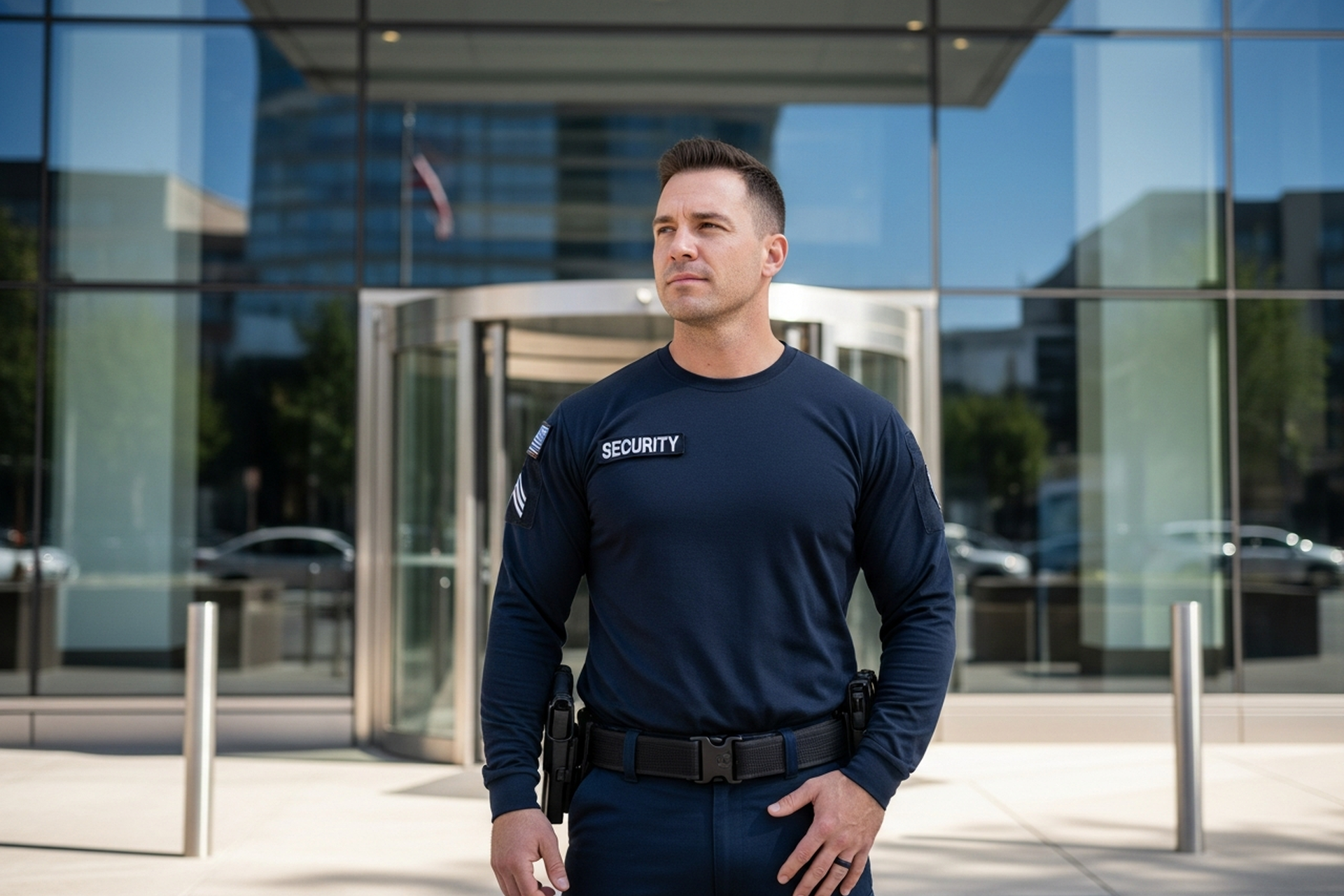
Safety compliance is not purely an HR or operations function. Professional security personnel are often the most visible enforcers of the safety protocols that protect employees, visitors, and contractors at the ground level.
Access control is one of the clearest areas of intersection. Visitor and contractor screening at entry points ensures that only authorized individuals enter work areas, reducing exposure to untrained workers who could create hazardous conditions. Contractors working on-site must meet OSHA and WISHA training requirements, and a security officer at the entry checkpoint can verify credentials and direct visitors to the appropriate escort, rather than allowing them to wander into restricted zones.
After-hours building access is another high-risk period for safety incidents. When maintenance, cleaning crews, and contract workers operate outside normal business hours, the site safety supervision structure is thinner. Mobile patrols or posted unarmed guards provide the visible oversight that deters unsafe shortcuts and ensures that anyone on-site after hours belongs there.
Post-incident response documentation is an area where security's contribution often goes unrecognized until it matters. When a workplace injury occurs, WISHA requires prompt investigation and documentation. Security personnel who witness or first respond to incidents can provide written accounts that support the employer's incident investigation, preserve scene conditions until a safety manager arrives, and ensure that injured employees receive immediate attention without additional personnel entering a potentially hazardous area.
Contractor and vendor management is a documented gap in many workplace safety programs. Employers in Washington are responsible for the safety of contractors working on their premises. Security personnel who manage contractor sign-in, confirm insurance and safety credential documentation, and enforce site safety rules at access points provide a layer of protection that internal staff often cannot sustain consistently during busy operational periods.
Escorting terminated or suspended employees involves both safety and security dimensions. An employee who is unexpectedly terminated and allowed to exit without escort creates risk: to themselves if they are distressed, to co-workers if the situation escalates, and to the employer under both WISHA general duty provisions and Washington's workplace violence prevention framework. A trained corporate security officer handling the escort reduces those risks calmly and professionally.
Integrating security into your workplace safety program
The most effective approach treats security as a component of the overall safety program rather than a separate function operating in parallel. This starts at the APP development stage. When drafting or updating your Accident Prevention Program, consider where security personnel intersect with hazard identification and control. If your facility uses posted officers, their shift procedures should be reflected in your APP. If you use mobile patrols, patrol logs can serve as part of your hazard surveillance documentation.
Training coordination matters as well. WISHA-required safety training and security orientation training cover overlapping territory: emergency evacuation, lockout/tagout zone awareness, chemical spill response, and incident notification. Running those programs jointly, or at least ensuring they reference the same procedures, prevents the gaps that arise when safety and security operate as isolated silos.
Broader workplace violence prevention also connects here. Washington employers in healthcare and several other sectors are under increasing regulatory pressure to implement written workplace violence prevention programs. Security planning, including risk assessments, incident response protocols, and employee reporting systems, aligns directly with that regulatory direction. A detailed look at building workplace violence plans specifically is covered in Cascadia's guide to workplace violence prevention plans for Seattle businesses.
Washington's compliance landscape rewards employers who treat safety as an ongoing operational discipline rather than a periodic audit exercise. The National Safety Council reports that preventable workplace injuries and fatalities carry costs that extend well beyond direct medical bills: lost productivity, regulatory penalties, and reputational damage compound quickly when a safety program is reactive rather than built in.
Frequently Asked Questions
What is the Accident Prevention Program requirement for Washington employers?
WAC 296-800-140 requires every employer in Washington to have a written Accident Prevention Program (APP). The APP must describe how the employer identifies workplace hazards, trains employees to avoid them, investigates incidents, and corrects unsafe conditions. There is no size exemption: the requirement applies to all employers, though the specific content of the APP scales with the complexity of the hazards present in a given workplace. Employers should verify current APP requirements directly with L&I or DOSH, as program elements may be updated through the WAC rulemaking process.
How does DOSH differ from federal OSHA for Seattle employers?
Washington State is a State Plan state, meaning it operates its own occupational safety program under WISHA rather than being enforced directly by federal OSHA. DOSH, the Division of Occupational Safety and Health within L&I, writes and enforces Washington's safety rules. Those rules must be at least as effective as federal OSHA standards and in some areas, including healthcare workplace violence and agricultural safety, they are more prescriptive. Seattle employers should verify requirements against WAC rules rather than assuming federal OSHA standards define the full compliance obligation.
Which industries face the most intensive DOSH oversight in Washington?
Construction, healthcare, agriculture, and manufacturing consistently receive the highest levels of DOSH enforcement activity in Washington. Construction sites face detailed requirements around fall protection, crane operations, and excavation safety under WAC 296-155. Healthcare facilities must meet bloodborne pathogen and workplace violence prevention requirements under state rules that exceed federal OSHA minimums. Agricultural operations in Washington are subject to heat illness, pesticide exposure, and sanitation rules under WAC 296-307. Employers in these industries should expect regular compliance activity and should have their written safety programs in order.
Does Washington require a separate workplace violence prevention program?
Washington's healthcare sector is subject to specific workplace violence prevention program requirements that go beyond those mandated by federal OSHA. The broader WISHA General Duty Clause also requires employers to protect employees from recognized hazards, which regulators and courts have applied to workplace violence in industries across the board. While a standalone written workplace violence prevention program is not yet universally mandated for all WA employers outside healthcare, the regulatory trend has moved steadily in that direction. Employers in high-risk environments, including retail, healthcare, and any setting with high public contact, benefit from having a written plan in place now.
How does professional security support workplace safety compliance in Washington?
Security personnel support compliance in several concrete ways: access control and contractor credentialing at entry points; after-hours oversight that fills gaps in normal supervision; post-incident documentation that supports WISHA-required investigations; and escort services for terminated employees that reduce the risk of escalation. When security procedures are integrated into the employer's written Accident Prevention Program, security officers become a documented part of the hazard control system rather than an add-on service operating separately from the safety program.
If you want help integrating professional security into your workplace safety program, Cascadia Global Security works with corporate and commercial facilities across the Puget Sound region. Call (800) 939-1549 or get a quote to discuss how a tailored security program can support your WISHA compliance obligations.