Worship Center Safety in the Pacific Northwest: A Security Guide
Josh Harris | May 11, 2026
Worship center safety in the Pacific Northwest sits at the intersection of two values that pull in different directions. Congregations want to feel open, welcoming, and accessible to anyone who walks through the door on a Sunday morning, a weekday funeral, or a community event. They also want to be honest that worship gatherings are high-trust environments where strangers, heightened emotions, and predictable schedules can create risk. Good worship security programs hold both truths at once.
The sections below cover the specific factors that shape worship center security in the Seattle region and the broader Pacific Northwest, the role of trained officers compared with congregation safety teams, the access-control practices that work without making people feel screened, and the children 's-area protections that responsible worship leaders prioritize.
Why worship centers carry a unique security profile
Most commercial security programs are built around buildings that close at night, restrict access by default, and treat unknown visitors as a category to manage. Worship centers operate on the opposite premise. The whole point of the space is to welcome people in, often without knowing who they are or what they need, and to do so during scheduled gatherings that anyone can look up online.
That openness is a feature, not a flaw, but it changes the risk calculus. A few characteristics make worship-center safety distinct.
Predictable schedules and published times create a known window for any threat that wants to find a worship community. Service times, holiday observances, wedding and funeral schedules, and youth-group meeting nights are public information. That is not a reason to hide them, but it is a reason to think carefully about who is present and what coverage looks like during those windows.
High-emotion events are common. Funerals, memorials, and weddings concentrate grief, joy, and family tension in a single space. Family members in active estrangement, contested custody situations, and unresolved disputes can converge in the parking lot or the lobby. Worship security planning that does not account for the emotional intensity of life-event services is incomplete.
Cash and personal valuables move through the space. Offering collection, fundraising events, and donation drives mean that worship centers regularly handle cash and checks. After-hours storage and transport practices matter.
Children, seniors, and other vulnerable populations are concentrated. Sunday school classrooms, youth groups, senior fellowship lunches, and food bank operations bring vulnerable populations into the building, sometimes simultaneously. Coverage planning has to reflect who is actually in the building at any given time.
Multi-use facilities expand the risk envelope. Many Pacific Northwest worship centers also operate preschools, food pantries, recovery support groups, community meeting spaces, and event rentals. Each function brings its own visitor stream and operating hours.
Congregation safety teams as the operational foundation
The most resilient worship-center security programs are not built around a single uniformed officer at the door. They are built around a trained congregation safety team whose members understand the building, know the regular attendees, and can recognize when something is off well before a stranger walking in does.
Safety teams typically include greeters at entry doors, parking-lot observers, ushers trained in evacuation and medical response, and a coordinator who manages the team during services. The team's job is observation, communication, and coordination with clinical responders or law enforcement when needed. It is not a paramilitary function and it should never be framed that way to the congregation.
Training matters. Volunteer safety team members benefit from instruction in observation skills, de-escalation, basic medical response, evacuation coordination, and clear protocols for when to call police. The Department of Homeland Security and CISA publish guidance specifically for houses of worship that covers physical security assessments, vulnerability mitigation, and emergency planning frameworks that congregations can adapt to their own facilities. That guidance is a useful starting point for safety teams that want a credible reference framework rather than a homegrown checklist.
Safety teams also need clear boundaries. Volunteers should not be making decisions about whether to confront someone, physically intervene, or take action that could escalate a situation. The standard protocol is to observe, deter through presence, communicate, and coordinate with the police if needed. Congregations that ask volunteers to do more than that are setting them up for harm and exposing the organization to significant liability.
Trained officers and where they fit
Trained security officers play a complementary role to congregation safety teams, not a replacement role. For many Pacific Northwest worship centers, the right configuration is a small safety team supplemented by one or two contracted officers during higher-risk windows.
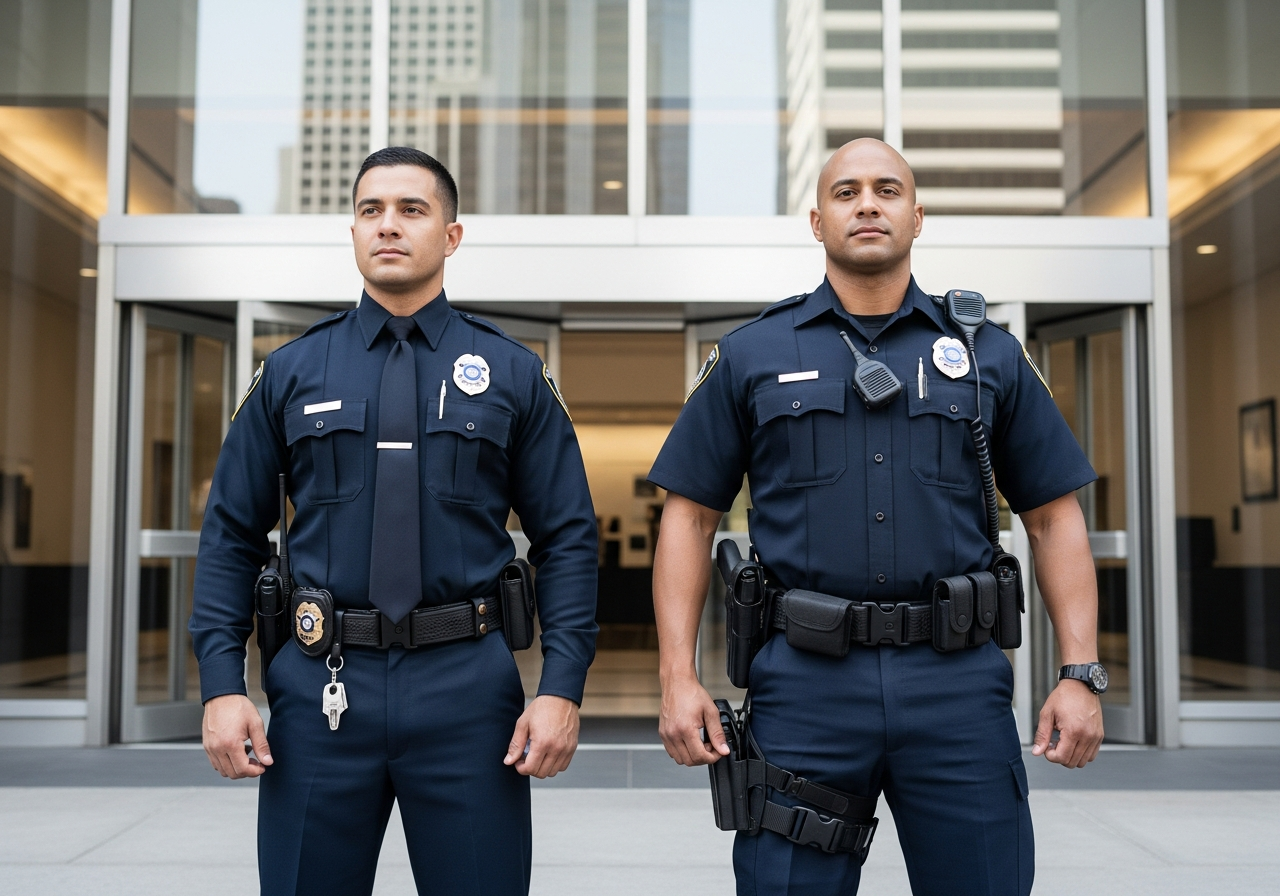
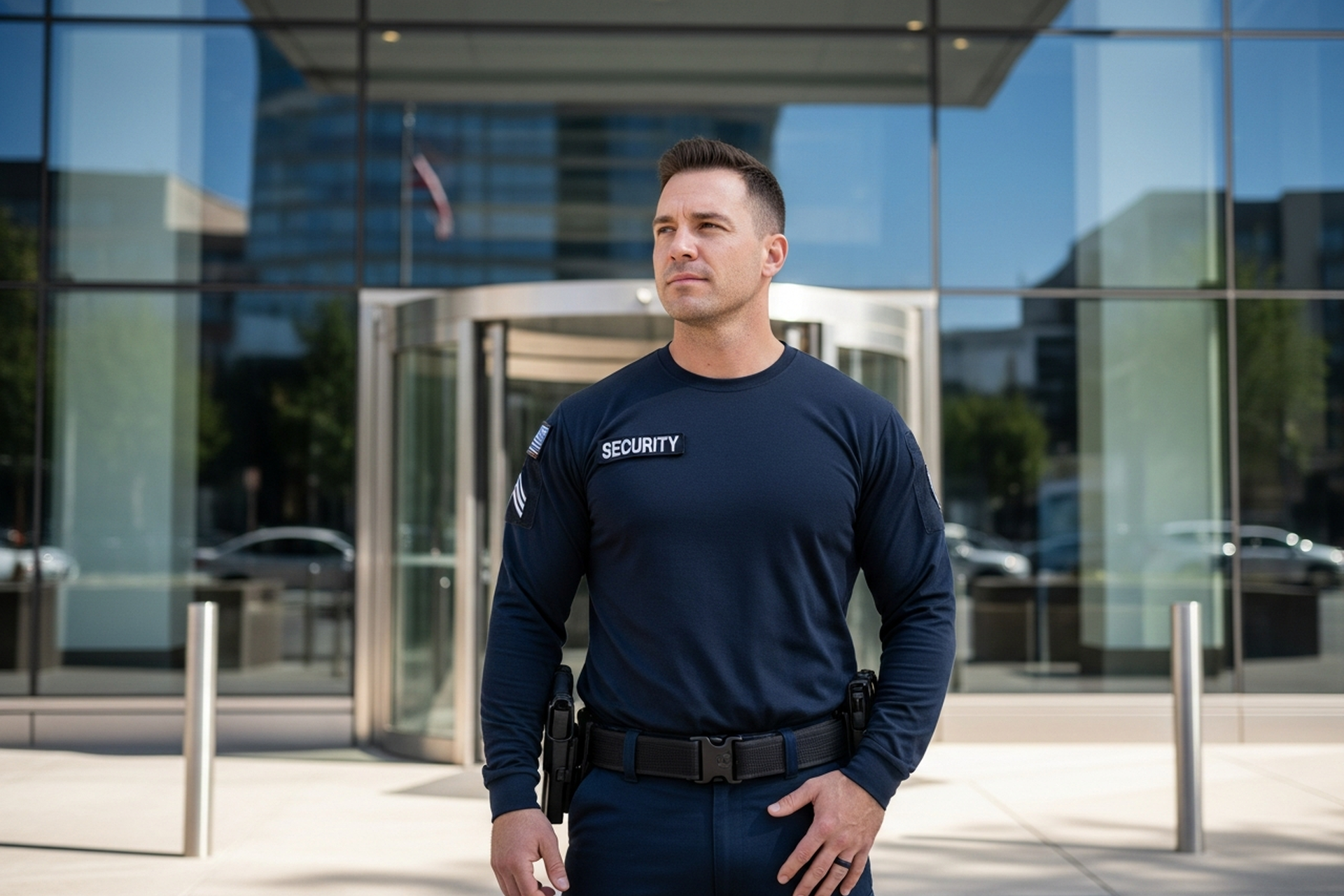
When a worship center brings in a contracted officer, the goal is typically a calm presence, professional observation, and a documented response capability that volunteers cannot provide. Officers should wear business attire or a non-tactical uniform suited to the environment, not full-duty gear that signals an expectation of confrontation. A calm officer at the lobby or the parking lot, visible but not intimidating, sends a different message than an aggressive posture and produces different outcomes.
Unarmed security services are the default for most worship-center contexts. The presence of a trained, professional unarmed officer addresses the most common security needs, including parking-lot patrol, lobby observation, after-service transition coverage, and incident documentation. Armed officers are appropriate in specific high-risk situations, but the decision to introduce armed coverage should be made carefully and with a clear understanding of the message it sends to attendees and visitors.
Mobile patrol services make sense for worship centers that need periodic overnight or weeknight coverage of parking lots, outbuildings, and grounds without a standing post. A patrol vehicle making documented visits at varying times provides visible deterrence without the cost of a stationary officer.
For larger services, multi-service holiday events, and high-attendance weddings or funerals, event security planning approaches apply. The same considerations that shape large-gathering planning, including crowd flow, access points, evacuation routes, and coordination with local police, are directly relevant to a worship center hosting a 1,500-person memorial or a community Easter service.
Access control without being unwelcoming
Access control is the area where worship centers feel the openness-versus-safety tension most acutely. The goal is not to turn the front door into a checkpoint. The goal is to know who is in the building, where they are going, and to make sure that no part of the facility is open to unsupervised access during sensitive activities.
A few practical principles produce strong access control without making attendees feel screened:
- Designate one or two primary entrances during services and gently route arrivals through them. Greeters at those doors create natural visibility into who is arriving.
- Lock or restrict access to children's wings, financial offices, and pastoral counseling spaces unless an authorized person is present. Doors that automatically lock after the entry window closes are unobtrusive yet effective.
- Use signage and physical layout to make the welcoming path obvious. People who deviate from that path stand out, which is the entire point.
- Train greeters to engage warmly with newcomers, not interrogate them. A genuine greeting accomplishes two things at once: it makes new attendees feel welcomed, and it gives the greeter a chance to observe and learn who is visiting.
- Consider a brief check-in procedure for children's programming that includes parent identification at pickup. This is the single most common access-control practice that worship centers should implement.
For Seattle and broader Pacific Northwest congregations, the practical reality is that homelessness, behavioral health crises, and addiction are visible parts of daily life. Worship centers regularly encounter individuals in those situations. The right response is rarely a security one. Connecting visitors with social services, providing food or shelter referrals, and treating the encounter with dignity is consistent with most congregations' missions. Security's role is to be present and observant, not to remove people who are not creating risk.
Children's area security
Children's programming is the area where almost every worship center should have its strongest security practices. The stakes are high, the population is vulnerable, and the practices are not difficult to implement.
The baseline is a check-in and pickup system that links each child to an authorized adult, ideally with a matching identifier (a number, a tag, or a card) that has to match at pickup. The check-in area should be physically separated from open-access areas and supervised at all times when children are present.
Children 's-area staff and volunteers should be background-checked. Most worship centers already follow this practice, but the protocols need to be documented, current, and consistent across all volunteer roles.
The two-adult rule, sometimes called the two-deep rule, is a standard practice in children's programming. No volunteer should be alone with a child outside of clear sightlines. This protects children and volunteers and reflects a serious approach to child safety.
Coverage during transitions matters as much as coverage during programming. Drop-off and pickup are the highest-risk windows. A safety team member or officer positioned near the children's wing entrance during those windows substantially reduces risk.
Coordination with local police
Worship centers in the Pacific Northwest benefit from active relationships with local law enforcement. Seattle Police, Bellevue Police, King County Sheriff, Pierce County Sheriff, Tacoma Police, and the smaller suburban departments across the Eastside, South Sound, and Snohomish County all have community-relations officers who can meet with worship leadership, walk the facility, and provide situational guidance.
Worship security planning should include current contact information for local police, a written protocol for when to call, and clarity on which incidents trigger an immediate call versus an after-the-fact report. Funding for capital improvements to worship-center facilities, including hardening doors and windows, upgrading lighting, and adding camera coverage, can sometimes be supported through the Nonprofit Security Grant Program administered by FEMA, which provides funding to nonprofits at high risk of terrorist or other extremist attack. The application process is competitive, and the requirements are detailed, but the program is a known funding pathway for worship centers and other nonprofits investing in physical security.
What this means for Pacific Northwest worship leaders
The honest framing for worship leaders thinking about safety is this: openness and security are not opposites, but balancing them requires intentionality. A worship center can be deeply welcoming and also know who is in the building, have trained people watching for behavioral cues, and have a clear plan for what to do when something is off.
The most resilient programs combine a trained congregation safety team, periodic contracted officer presence during higher-risk windows, sound access control practices that prioritize children's areas, and active relationships with local police. None of those elements alone is sufficient. Together, they create a security posture that protects without compromising the welcoming character that congregations want to preserve.
For Seattle and Pacific Northwest worship centers evaluating whether to bring in a professional security partner, the right vendor is one that understands the worship environment, can deploy officers who project calm rather than intensity, and is willing to support the congregation's safety team rather than replace it. That collaborative model produces better outcomes than vendors who treat worship centers as retail or commercial sites with the same threat profile.
Frequently Asked Questions
What is the difference between a congregation safety team and a contracted security officer?
A congregation safety team is made up of trained volunteers from within the worship community whose role is observation, greeting, and coordination during services. A contracted security officer is a paid professional from a security guard company who provides documented coverage, professional incident response, and a level of training and accountability that volunteers typically lack. The two roles complement each other rather than compete. Most Pacific Northwest worship centers benefit from both.
Should our worship center have armed or unarmed officers?
Unarmed officers are the default for most worship-center contexts and are appropriate for parking-lot coverage, lobby presence, and event support. Armed coverage is a decision that should be made carefully, in consultation with worship leadership, in light of specific threat indicators, and with a full understanding of the message it sends to the congregation and visitors. There is no universal answer, but the burden of proof should lie with adding armed coverage rather than with the unarmed default.
How do we keep our worship center welcoming while still maintaining access control?
The most effective approach is to use layout, signage, and warm greeters at one or two primary entrances to guide arrivals naturally, while restricting access to sensitive areas such as children's wings and offices. Greeters who engage attendees genuinely, rather than checking IDs at the door, accomplish both the welcoming and observation goals simultaneously. The point is to know who is in the building, not to make people feel like they are being screened.
What training does our congregation safety team need?
Volunteer safety team members benefit from training in observation skills, basic de-escalation, evacuation coordination, medical response, and clear protocols for when to call police. CISA's houses-of-worship guidance and resources from regional emergency management offices are useful frameworks. Training should make clear that volunteer roles are observe, deter, communicate, and coordinate, not confront or physically intervene.
How should our worship center protect children during Sunday school and youth programming?
The strongest protections are a check-in and pickup system that links each child to an authorized adult with a matching identifier, background checks for all children 's-area staff and volunteers, the two-adult rule that prevents any volunteer from being alone with a child outside clear sightlines, and dedicated coverage of the children 's-wing entry during drop-off and pickup windows. These practices are not difficult to implement, and they should be in place at every worship center that serves children.
Cascadia Global Security supports Pacific Northwest worship centers, nonprofits, and community organizations with security programs designed for environments where dignity, welcome, and safety are equally important. Our officers are trained to project calm professional presence, coordinate with congregation safety teams and local police, and document their work in a way that supports the organization's broader risk management.
To discuss your worship center's security needs, contact us at (800) 939-1549 or get a quote.