Seattle Event and Festival Security for Large Gatherings
Josh Harris | May 14, 2026
Running a large event in Seattle means managing far more than a guest list. A city with one of the densest event calendars in the Pacific Northwest, dozens of neighborhood block events, major professional sports franchises, an internationally recognized outdoor music culture, and a transit infrastructure that concentrates tens of thousands of people into compact corridors demands security planning that accounts for every layer of the experience. Event and festival security in Seattle is not a checklist you complete the day before. It is a planning process that begins weeks before the first guest arrives.
Why Seattle event security has its own profile
The Seattle event landscape is unusually varied. On any given summer weekend, Lumen Field may be hosting a Seahawks or Sounders match while a neighborhood festival runs six blocks away in Capitol Hill and a ticketed concert fills Climate Pledge Arena. The Seattle Center campus hosts multiple events simultaneously throughout the year, including Bumbershoot, and the Capitol Hill Block Party draws thousands of attendees across multiple stages in a compact urban grid. T-Mobile Park anchors one of the most active stadium blocks in the city during baseball season.
Outdoor events face weather variability that can shift conditions mid-event. Rain plans, tent weight tolerances, and crowd-flow adjustments for wet surfaces are not optional considerations; they are standard elements of any well-built event security plan. Transit complexity in downtown Seattle means large crowds arrive and depart through a limited number of access points (light rail stations, parking garages, ferry terminals), and crowd density at those chokepoints must be anticipated in the security staffing model.
Neighborhood events from Ballard to Pioneer Square to South Lake Union carry their own character and risk profile. A block party in a tight residential corridor operates very differently from a stadium event, but both benefit from structured perimeter management, clear ingress and egress planning, and a pre-event coordination meeting with local SPD precinct liaisons.
Pre-event planning: the foundation of effective security
A professional security provider starts with a site survey, not a staffing spreadsheet. Walking the venue in advance allows the security team to identify natural chokepoints, assess sight-line coverage, mark medical access routes, note lighting gaps, and document staging areas that could create blind spots on the day.
From the site survey, the team builds a risk assessment that accounts for expected attendance, alcohol service zones, proximity to transit, parking configurations, and any elevated-risk factors specific to the event type. A corporate gala at a hotel requires a different risk profile than a multi-stage outdoor festival, even if both share a headcount.
Permit coordination is one of the most time-sensitive parts of the planning process. The Seattle Office of Special Events manages the permitting framework for events on city property, and security plans are often a formal requirement of the permit package. SPD and SFD review the event security plan as part of their assessment of neighborhood impact, traffic management, and emergency access requirements. For larger events, the fire department will want to confirm that emergency vehicle corridors remain clear and that first-aid staging is positioned to minimize response times.
A communications plan is part of the security plan, not a separate document. Officers need radio channels, escalation contacts, and a clear chain of command. Medical staff, production coordinators, and law enforcement contacts should all be captured before the event opens.
Day-of staffing components
A well-structured event security team covers several distinct functions, and each has a different footprint on the venue.
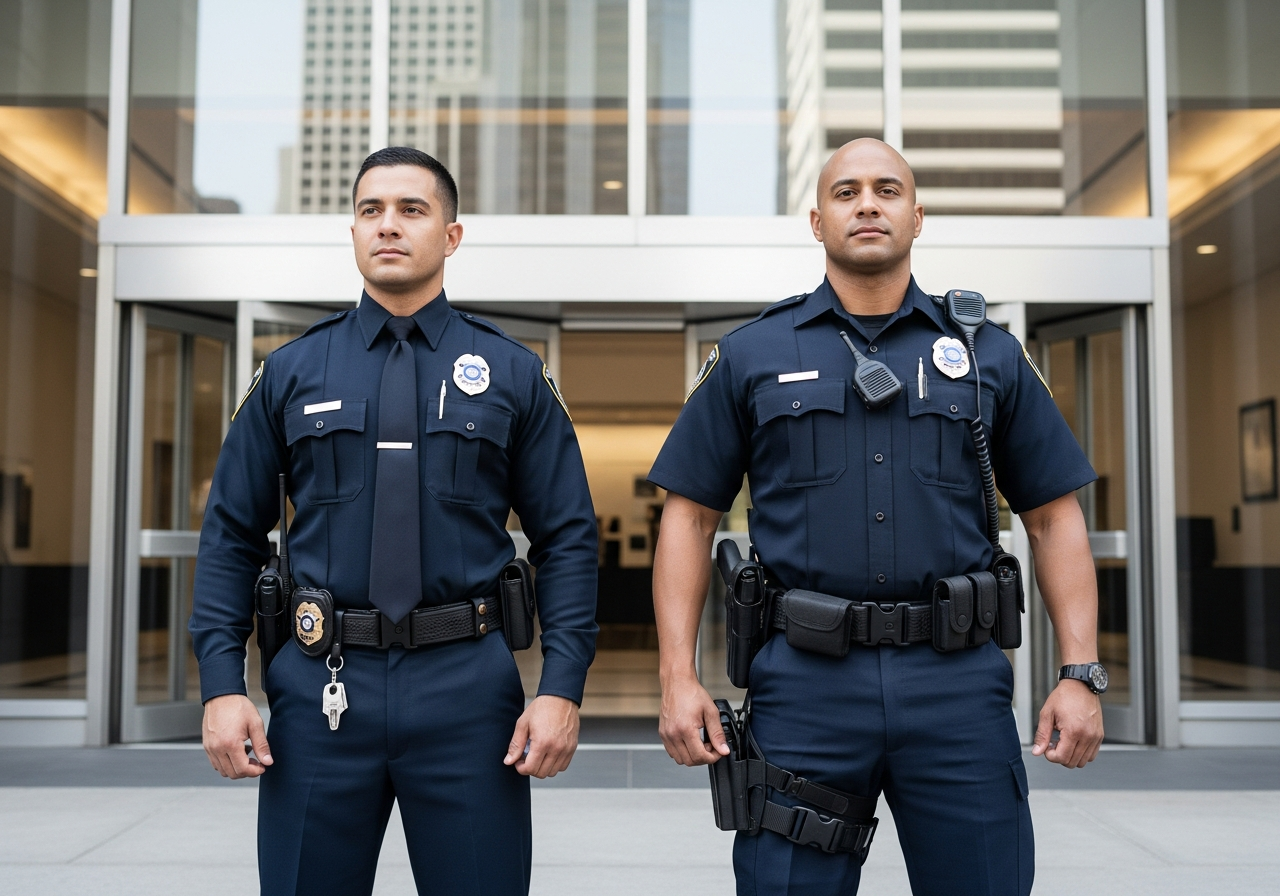
Perimeter control establishes the outer boundary of the event and deters unauthorized entry before crowds build inside. Officers at perimeter positions maintain awareness of vehicles, unattended items, and access points that are not part of the approved ingress flow.
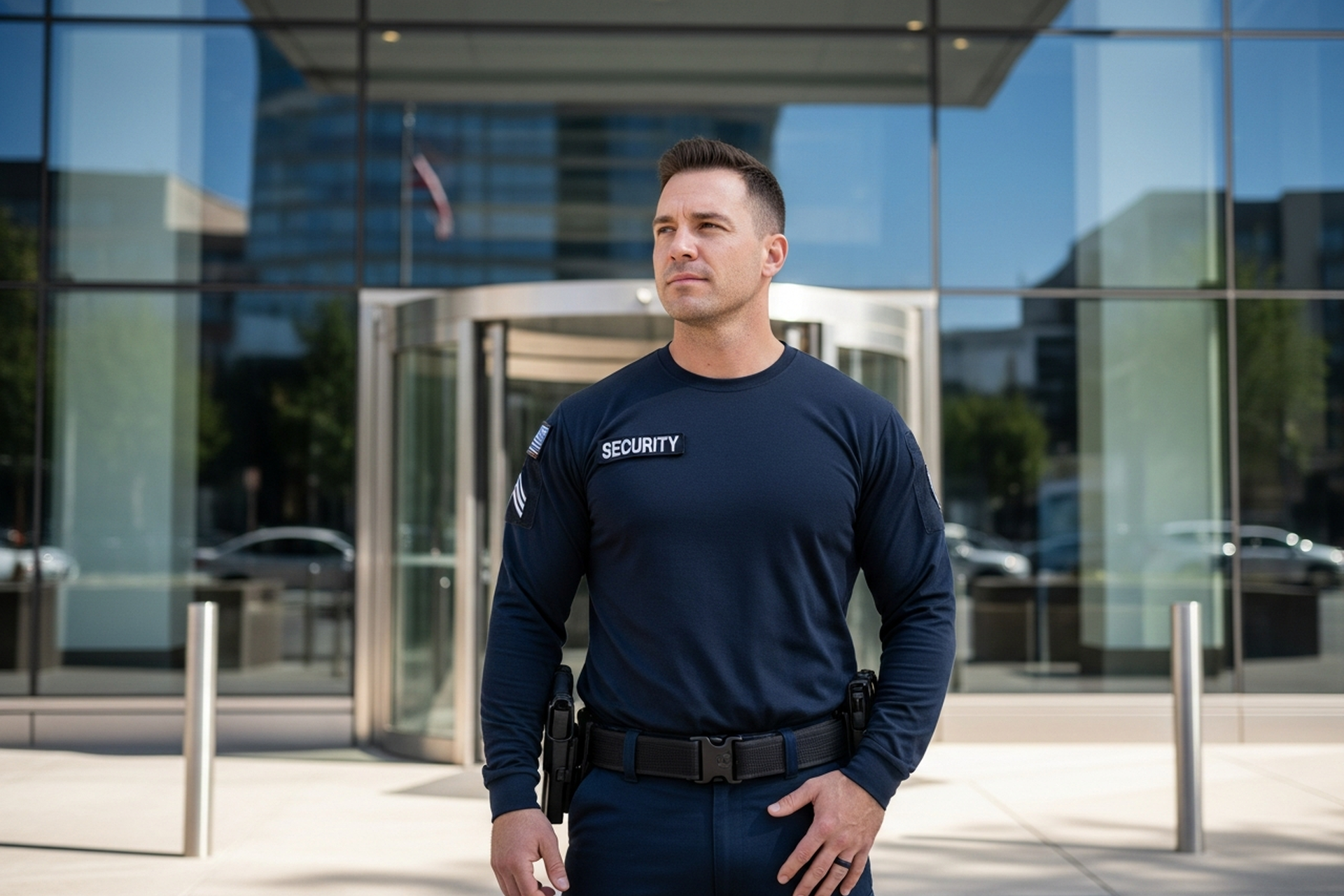
Ingress and egress management is where crowd density is highest and where the majority of incidents occur at public events. Unarmed security officers are the most common deployment at ticket-check and entry points, maintaining queue order, answering guest questions, and deterring line-jumping or credential fraud without escalating the atmosphere of the event.
Crowd-flow management involves positioning officers at interior pinch points (stage fronts, food service areas, restroom banks, and stairs) to monitor density and facilitate movement. Officers observe and radio conditions back to a command position; they do not act as crowd-management specialists, but they provide the situational awareness that allows event producers and venue management to make real-time decisions.
VIP and talent coverage is a distinct staffing function that keeps performers, sponsors, and high-profile guests separated from general admission areas. Executive protection protocols apply when the individual's profile warrants it, but most event talent coverage is handled through off-duty law enforcement or senior officers with relevant experience. Access to backstage and artist areas is controlled through credentialing, not just physical presence.
Medical liaison positioning supports the event's first aid team by ensuring officers know where AED units, first-aid stations, and emergency vehicle corridors are located. An officer who cannot quickly clear a path to a medical staging area adds time to a response that cannot afford delays.
Post-event coverage is often underfunded. The hour after an event ends is when perimeter awareness drops, crowds concentrate at transit exits, and the risk of property incidents increases. Planning for an adequate post-event footprint is as important as planning the door coverage during the event itself.
Special considerations for outdoor festivals
Outdoor festivals in Seattle carry weather-specific planning requirements that indoor venues do not. Rain alters crowd behavior, creates surface hazards in high-traffic areas, and can reduce the effectiveness of temporary barriers and fencing if the ground softens. Security plans should address what happens if conditions change after the event opens.
Vehicle barriers at public street events are a pre-event logistics item that requires coordination with the city and SPD. Temporary barrier placement affects traffic management for surrounding blocks, and the security team should understand the barrier plan before the first officer is deployed.
Hydration and heat management are relevant during summer events at venues like Seattle Center and outdoor lakefront stages. Officers working extended outdoor shifts need logistical support; they cannot observe and deter effectively if they are not rotated and supplied appropriately.
Lighting coverage matters at dawn-to-dark outdoor events. As natural light fades, security coverage must account for reduced visibility in perimeter areas and parking fields adjacent to the venue. Mobile patrols are an effective tool for covering parking areas and event perimeters during and after the event, particularly useful at large-footprint outdoor festivals where a static post cannot cover the ground.
Coordination with SPD, SFD, and event production
Professional event security providers work alongside city agencies, not in competition with them. The International Association of Venue Managers publishes operational guidance covering how private security providers and venue management teams structure their cooperation with local law enforcement and fire agencies. The standard practice is clear: lines of responsibility should be defined before the event, not during it.
SPD will typically designate a liaison contact for large permitted events. Establishing communication with that contact during planning, not on the day of the event, allows the security team to understand precinct-level concerns, confirm emergency response protocols, and brief officers on jurisdiction boundaries. Private security officers observe, deter, and coordinate. Enforcement actions involving criminal activity remain with SPD.
SFD fire watch requirements may apply to events using temporary structures, open-flame cooking, generators, or pyrotechnics. For events where fire watch coverage is mandated, that function is a separate assignment from event security staffing, with officers dedicated to monitoring fire hazards rather than managing crowds.
Event production staff are partners in the security plan, not supervisors of the security team. Pre-event briefings that include production, security, and venue management help align expectations on authority and communication flow before a situation requires anyone to make a fast decision.
Choosing the right security provider for your event
Experience with comparable events matters more than firm size. A provider who has staffed outdoor festivals, coordinated with SPD on permitted events, and managed multi-stage venues brings institutional knowledge that a first-time event security provider cannot substitute with generic staffing. Ask about specific event types the provider has covered, how they structure command and communication, and whether their officers receive event-specific briefings before deployment.
Licensing is a baseline, not a differentiator. Every private security officer operating in Washington must hold a valid security guard license through the Washington State Department of Licensing. Verify that the provider's staffing roster is fully licensed before execution day.
Flexibility matters for event security in a way it does not for fixed-post coverage. Head counts shift, weather changes, and production schedules slip. A provider who cannot scale staffing or adjust post assignments in response to real-time conditions creates risk rather than reducing it.
Cascadia Global Security staffs events across the Seattle market, from neighborhood block events and hotel ballrooms in the hotels and hospitality sector to large outdoor festivals and stadium-adjacent deployments. Our team coordinates with venue management, production, and city agencies to build staffing plans that reflect the actual footprint of your event, not a generic deployment template.
To discuss security planning for your event or festival in Seattle, contact us for a quote or call (800) 939-1549.
Frequently Asked Questions
How far in advance should event festival security in Seattle be planned?
For large outdoor festivals or events at major venues in Seattle, a minimum of six to eight weeks of lead time gives the security team adequate time to complete a site survey, develop a staffing plan, coordinate with the Seattle Office of Special Events, and brief officers on the specific requirements of the event. Smaller private events with controlled guest lists can often be planned on a shorter timeline, but any event involving public permitting, street closures, or coordinated SPD and SFD review benefits significantly from starting the security planning process early.
What types of officers are typically deployed at Seattle festivals and public events?
Most public festival and outdoor event coverage in Seattle is handled by unarmed security personnel deployed at entry points, interior crowd-flow positions, and perimeter posts. Off-duty law enforcement officers are sometimes engaged for specific assignments where a commissioned peace officer presence is appropriate, such as talent or VIP coverage. Armed security is evaluated on a site-specific and event-specific basis; it is not a default requirement for most public festivals or community events.
Does a security provider coordinate directly with SPD and SFD for permitted events?
Yes. A professional security provider works directly with the SPD precinct liaison designated for the event and coordinates with SFD when fire watch, emergency access planning, or temporary structure requirements are part of the permit conditions. Clear pre-event coordination with city agencies is a standard component of any professionally managed event security plan and is often required as part of the permitting package reviewed by the Seattle Office of Special Events.
What does a post-event security footprint typically cover?
Post-event security coverage focuses on three areas: monitoring the venue as crowds disperse, maintaining perimeter integrity while production and vendor teardown crews work on-site, and covering adjacent parking areas and transit corridors where guests concentrate after the event closes. This coverage period is often the most overlooked part of an event security plan, but it carries meaningful exposure, particularly for events in dense urban neighborhoods or near major transit hubs.
How does weather affect event security staffing in Seattle?
Rain and low visibility create conditions that require adjustments to surface-level perimeter coverage, officer rotation schedules, and crowd-flow management at outdoor events. Officers assigned to exterior positions need appropriate gear and rotation intervals to stay effective during extended shifts in wet conditions. The security plan for any outdoor event in Seattle should include a weather contingency protocol that addresses what changes when conditions deteriorate, including adjustments to barrier positioning, lighting coverage, and communication with event production staff.