Chicago Hotel Security: Best Practices for Hospitality
Josh Harris | May 25, 2026
A large convention checks out of a South Loop hotel on Friday morning, and a sold-out concert crowd checks in by early afternoon. By that evening, the lobby is serving as both arrival point and impromptu gathering space, housekeeping is cycling through a full house of rooms, and the parking structure is handling a steady stream of unfamiliar vehicles. Hotel security in Chicago is not a single fixed problem with a single fixed solution. It is a set of overlapping responsibilities that shifts with the property type, the calendar, and the crowd.
This guide covers who needs hotel security in Chicago, what threats are specific to hospitality environments, how layered security programs are structured, and what operational standards distinguish a serious program from a reactive one.
Who Needs Hotel Security and Why
Every hotel faces daily security exposure, but the risk profile varies by segment. Understanding which category a property falls into helps operators scope a program that matches real operational demands rather than a generic template.
Convention hotels in the McCormick Place and South Loop corridor face the densest threat surface. A single trade show can run 10,000 to 30,000 attendees through a property's lobby, ballrooms, and service corridors over a few days. Credentialed access for show staff, exhibit floor contractors, and media must coexist with standard hotel guests who have nothing to do with the convention.
Luxury properties along the Magnificent Mile and in Streeterville serve a guest profile that includes business executives, international travelers, and high-profile visitors. Lobby presence, key card integrity, and discreet VIP handling are the standing expectations.
Loop business hotels run a more transactional operation: high room counts, corporate travelers, and consistent turnover that creates an ongoing trespass and theft exposure in public areas. The lobby functions as a semi-public space around the clock.
Airport hotels near O'Hare and Midway serve a round-the-clock clientele, including late-arriving or early-departing guests at unusual hours, shuttle operations, and extended-stay guests who can blur the line between hotel and residential use. Overnight shift coverage is not optional for these properties.
Boutique hotels in Fulton Market and the West Loop often have smaller footprints but draw a bar and restaurant crowd through ground-floor venues that extend well beyond standard hotel guests. Managing access between restaurant patrons and the hotel's residential floors requires clear boundary enforcement.
Suburban business hotels in Schaumburg, Oak Brook, and along the I-90 corridor deal with extended-stay guests, corporate block contracts, and conference business that arrives in waves, with long stretches where public areas sit largely unwatched.
Threats Specific to Hotel Environments
Hotels present a distinct threat profile from other commercial properties because they are designed to welcome strangers. The open-access model that makes hospitality work also creates meaningful vulnerabilities.
Unauthorized floor access is a persistent issue. Elevators in most hotels do not require key cards beyond initial activation, and a determined trespasser can move between floors with little friction once inside the building. Guest floor patrols by an unarmed guard on a documented route address this without the confrontational appearance of a checkpoint at every floor landing.
Guest room and property theft range from items left in lobby seating to bell carts loaded with luggage in an unmonitored corridor. High-value personal items in rooms are a target when housekeeping doors are propped open during service. LP officers at larger properties monitor for pattern behavior across camera feeds and property reports.
Housekeeping staff safety is a recognized industry concern. Employees working alone in guest rooms, particularly during overnight or early-morning shifts, face exposure to guest confrontations with limited immediate support. Several hotel brands now mandate employee safety devices (panic buttons) as part of corporate policy, and Illinois properties have seen corresponding increases in security program requirements that address this directly.
Vagrancy in public areas, including lobbies, restaurants, and fitness centers, is a routine issue for downtown properties. Officers trained in de-escalation and hospitality-appropriate communication resolve most of these situations without incident while preserving the guest experience.
Fraudulent registrations using stolen or synthetic credit card data affect front desk operations and can result in room occupancy by individuals with no legitimate booking. Front desk staff training and coordination with the security team to flag suspicious check-in patterns reduces this exposure.
Human trafficking is a recognized risk in hotel environments, and it carries real compliance implications. Illinois law and several federal frameworks require that hotel employees receive training to identify and report potential trafficking situations. Polaris defines and documents the trafficking typologies most common in the hospitality sector, including indicators specific to hotel settings. Security officers who understand these indicators provide an additional layer of observation that supplements training for front desk and housekeeping staff.
The Layered Security Model for Hotels
Effective hotel security is not a single post by the front door. It is a set of overlapping roles and functions that together produce consistent coverage across every operational zone of the property.
Front-Of-House Officer
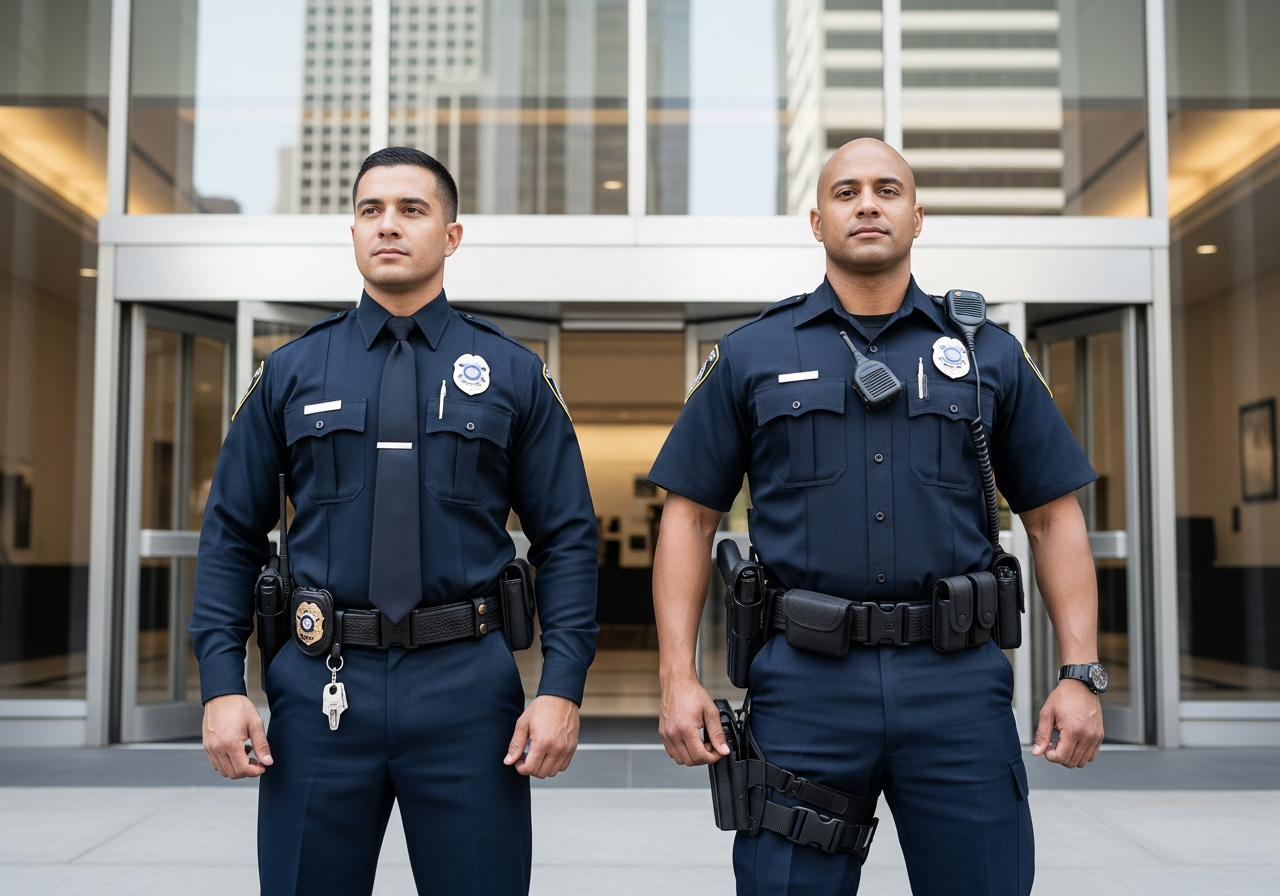
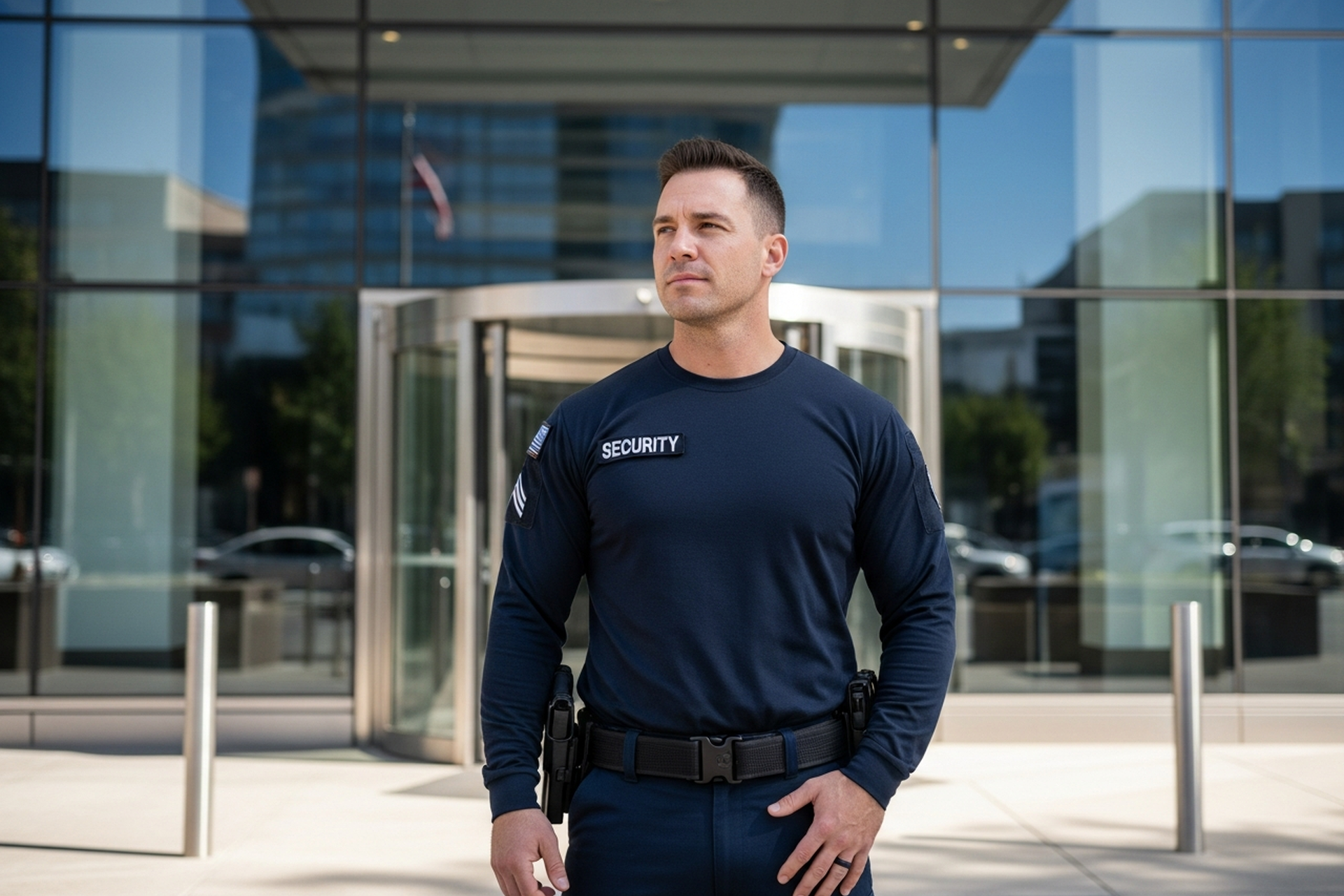
The most visible role on a hotel security team functions less like a guard and more like a concierge-adjacent presence. This officer greets arriving guests, manages lobby flow during peak periods, escorts late-arriving guests to their floors, and handles the low-level situations (lost key cards, noise complaints, lobby loiterers) that front desk staff cannot safely absorb alone. Deterrence comes from visibility and calm competence, not from a confrontational posture.
Guest Floor Patrol Officer
A separate officer running a documented patrol route through guest floors, stairwells, the fitness center, and the parking structure provides the coverage that the lobby officer cannot. This role is where trespass, unauthorized floor access, and room-area theft are most likely to be detected. Patrol logs create an auditable record that also supports insurance documentation.
Loss Prevention Officer
Larger properties with significant F&B operations, a spa, retail, or conference center revenue often carry a dedicated LP officer focused on internal and external theft. Camera monitoring, point-of-sale auditing, and coordination with department heads on inventory discrepancies are the core functions. This role operates without a visible uniform and is more investigative than patrol-oriented.
CCTV Monitoring and Key Control
Camera coverage across arrival zones, elevators, service corridors, and parking is a baseline expectation for any full-service hotel. Equally important is key card integrity: master key inventory logs, an audit of room key reissues, and a process for flagging repeated rekey requests (which can signal a room access issue). Panic button integration for housekeeping staff, already mandated by several major brands under programs like the AHLA 5-Star Promise, represents a growing expectation for any property seeking to meet current industry standards.
Staffing Models by Property Type
There is no single right staffing model for hotel security. The right configuration depends on property size, hours of operation, the convention calendar, and the neighborhood's specific threat profile.
A 24/7 in-house officer is the baseline for full-service hotels with active overnight operations. This model provides continuous coverage and allows the officer to become deeply familiar with the property's rhythms, staff, and regular guests.
An overnight-only officer makes sense for properties that carry active security during peak daytime hours through management staff, but face a coverage gap from late evening through early morning. This is a cost-effective model for mid-size suburban properties without extensive late-night F&B programming.
Mobile patrol drive-throughs serve smaller properties or extended-stay hotels that do not justify a dedicated stationary officer. A documented patrol vehicle making multiple passes through the property overnight provides deterrence and a verifiable security record without full-time staffing costs.
Off-duty law enforcement supplements the standing program for high-profile events, VIP arrivals, or periods of elevated risk. CPD officers working secondary employment through the Department's established process bring full peace officer authority and visible deterrent capacity that private officers cannot replicate.
Licensing and Training Standards in Illinois
Every private security officer working in Illinois must hold a valid Permanent Employee Registration Card (PERC), issued by the Illinois Department of Financial and Professional Regulation, and agencies must carry their own agency license. Armed officers require a separate Firearm Control Card (FCC). For hotel security, most positions are unarmed; armed deployment is limited to high-profile VIP situations or properties with documented elevated threat levels.
Training requirements for hotel contexts go beyond the PERC minimum. De-escalation is essential: most hotel security situations involve guests who are distressed, intoxicated, or confused rather than dangerous, and defusing a situation without physical intervention helps keep a property's reputation intact. ADA-compliant response, medical first-response awareness (CPR, AED location), and fire procedure familiarity round out the baseline.
Anti-human trafficking awareness training is increasingly required rather than optional for hotel staff. Security officers who complete this training are equipped to observe and report in coordination with law enforcement rather than intervening directly, an important distinction that any well-structured hotel security program should build into new officer onboarding.
VIP and Event Integration
Hotels that host convention groups or serve as headquarters hotels for major events need a scalable security program. A standing team of one or two officers handles a standard occupancy week. A 30,000-person medical convention week requires a different configuration: credentialed access at service entries, increased lobby officer staffing, coordination with the hospitality and event security team at McCormick Place, and a documented protocol for VIP arrivals and departures.
VIP handling at a hotel is distinct from the event's public security posture. The objective is seamless movement: pre-cleared arrival routes, a designated hold space away from public areas, elevator holds for transition, and a clean handoff to the guest's personal protection team at the departure point. A security partner with close-protection coordination experience manages this without disrupting normal operations.
For hotels and hospitality properties with recurring event calendars, a long-term security relationship produces compounding value. Post orders get refined each quarter, officers learn the property, and incident logs become a dataset that shapes the next staffing decision. That is the difference between security that manages problems and security that prevents them.
Frequently Asked Questions
What type of security does a Chicago hotel typically need?
Most hotels use unarmed security officers for daily operations: lobby presence, guest floor patrols, and parking coverage. Larger properties add LP officers and CCTV monitoring. Off-duty CPD or armed coverage is reserved for specific events or elevated-threat situations.
Is hotel security in Illinois required to be licensed?
Yes. Every private security officer in Illinois must hold a PERC card issued by the Illinois Department of Financial and Professional Regulation. The employing agency must also carry a current agency license. Armed officers require an additional Firearm Control Card.
What is the difference between a front-of-house officer and a patrol officer at a hotel?
The front-of-house officer provides a visible presence in the lobby and manages guest-facing situations. The patrol officer runs a documented route through guest floors, service areas, and the parking structure. Both roles are part of a layered program; one does not substitute for the other.
How does anti-trafficking training apply to hotel security officers?
Security officers trained in trafficking indicators can observe and report concerns through established channels without intervening directly. This supplements the training already required for front desk and housekeeping staff and aligns with federal and Illinois guidance on hotel industry responsibilities.
How should a hotel handle VIP arrivals?
VIP arrivals require pre-event coordination: a confirmed arrival route, a hold space away from public lobby traffic, elevator access management, and communication with any personal protection team. A security partner experienced in this coordination handles the logistics without visible disruption to the property.
Work with Cascadia on Your Chicago Hotel Security Program
Cascadia Global Security designs and staffs hotel security programs across the Chicago metro, from convention-scale South Loop properties to boutique Fulton Market hotels and suburban extended-stay facilities. Our officers are PERC-licensed, trained in hospitality-specific protocols, and experienced in the coordination demands of Chicago's event calendar.
Contact us for a quote or call (800) 939-1549 to discuss a staffing model that fits your property type and operational schedule.