Construction Site Security in Dallas: Stop Theft on Job Sites
Josh Harris | May 22, 2026
Construction Site Security in Dallas: Reducing Theft on Active Job Sites
Dallas-Fort Worth is one of the fastest-growing construction markets in the country, and that velocity comes with a cost. The more active sites, staged equipment, and open perimeters across the metroplex, the more opportunities thieves get. Effective construction site security in Dallas is not optional for projects running on tight schedules and tighter margins. It is a direct line item between staying on budget and absorbing losses that no insurance check fully covers.
Why DFW Construction Sites Are a High-Value Target
Texas accounts for roughly 24% of all construction equipment theft incidents nationally, more than any other state. With DFW authorized to build over 71,000 new residential units in 2024 alone (ranking first among major metros), and commercial development continuing at pace across Frisco, Plano, Arlington, Las Colinas, and Legacy West, the sheer volume of active sites creates a target-rich environment for organized theft crews.
The economics are direct:
- The average theft incident on a construction site costs $30,000 in direct losses, and recovery rates sit below 25% without GPS tracking.
- A single stolen excavator or skid steer can push a project timeline back weeks while replacement equipment is sourced and insurance paperwork runs its course.
Urban job sites in Dallas proper face a different risk profile than suburban builds in Frisco or Mansfield. Urban sites sit closer to high-traffic corridors, making after-hours vehicle access and rapid extraction easier for theft crews. Suburban new-construction neighborhoods, meanwhile, often lack adequate lighting, perimeter definition, and any after-hours presence, making them equally vulnerable despite lower foot traffic.
The combination of high equipment values, dense site concentration, and an active resale market for stolen construction materials makes DFW one of the most theft-exposed construction environments in the Southwest.
Common Construction Site Security Risks in North Texas
Understanding what you are protecting against shapes every other decision on a job site. North Texas construction sites face a consistent set of threats:
Equipment theft. Excavators, skid steers, generators, compressors, and trailers are the primary targets. Theft crews often work in coordinated teams, arriving with low-bed trailers after hours. Without an on-site guard or active patrol, a piece of equipment can be gone in under 20 minutes.
Copper wire and material theft. This is a growing and disproportionate problem in DFW. Fort Worth alone saw a 53% increase in metal theft between 2020 and 2024, and DFW-area police have arrested over 250 people for copper theft in a single year. AT&T spent more than $1 million repairing copper theft damage across the metroplex. At construction sites in particular, newly installed copper wiring in unoccupied structures is repeatedly stripped, setting electrical work back and incurring high rework costs.
Vandalism and trespassing. Open sites attract unauthorized access ranging from curiosity-seekers to deliberate sabotage. Vandalism to finishes, equipment, or safety infrastructure is a direct cost and a liability.
Perimeter breaches. Temporary fencing is a starting point, not an endpoint. Without monitored access control, a chain-link perimeter is breached in seconds.
Fire watch gaps. Many GCs underestimate fire watch obligations during active construction phases, creating both safety exposure and code violation risk. This is covered in detail below.
After-hours intrusion. The majority of construction site theft occurs between 6:00 PM and 6:00 AM. Sites with no presence during those hours are the easiest targets.
Layered Security for DFW Job Sites
No single measure secures a construction site. Effective protection stacks multiple layers, each compensating for the gaps in the others.
Perimeter fencing and lighting. Temporary chain-link fencing defines the boundary. Adequate lighting, particularly at access points, equipment staging areas, and material storage, removes the cover that theft crews depend on. Motion-activated lighting serves as a deterrent after hours.
Access control gates. Controlled entry points with logged access deter unauthorized vehicle traffic and create an accountability record for who is on site and when. A security guard stationed at the gate during peak hours adds a human layer that cameras alone cannot replicate.
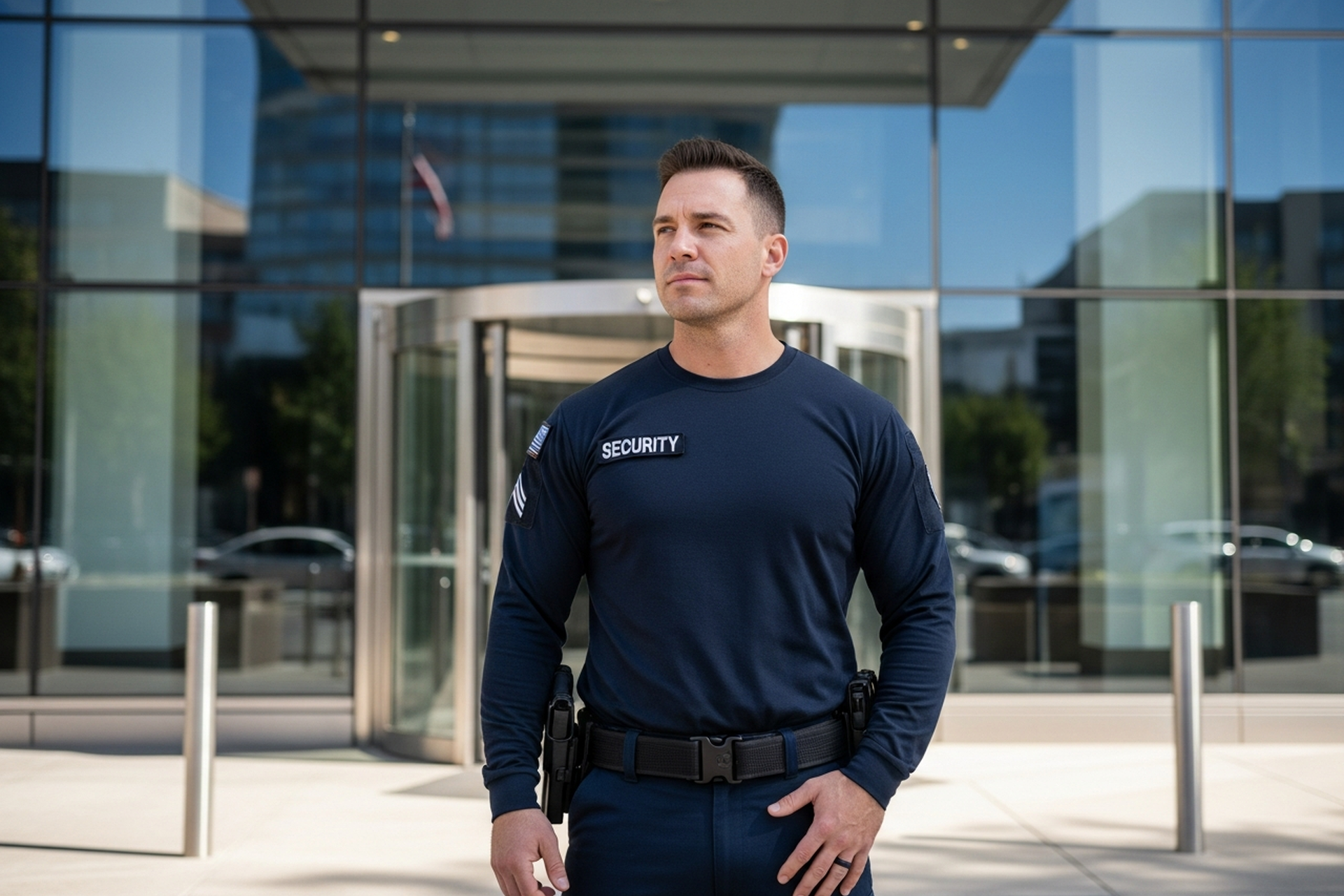
On-site guards. A uniformed officer on site provides real-time response capability, visible deterrence, and the ability to engage law enforcement immediately. Cascadia's officers are GPS-tracked and submit real-time reports, so you have a documented record of every patrol and incident.
Mobile patrols. For sites where continuous on-site coverage is not the right fit, scheduled and randomized mobile patrols by a marked security vehicle create a deterrence pattern that is harder for theft crews to time around. Cascadia's mobile patrol services cover DFW sites across multiple patrol rotations per night.
Fire watch integration. Fire watch is a separate compliance obligation but is often handled by the same security team. Trained officers conduct documented rounds, log conditions, and are positioned to respond to early fire signs during outages or hot work periods.
Surveillance coordination. Security cameras extend coverage to areas guards cannot continuously watch. When paired with a guard or patrol, camera footage becomes an active monitoring tool rather than a passive after-the-fact record.
On-Site Guards vs. Mobile Patrols: Choosing the Right Coverage
This is the question most project managers and GCs face when building a security plan. The right answer depends on project size, risk profile, and budget, and in many cases the best plan uses both.
On-site guards make sense when:
- The site is in an urban location with regular after-hours activity nearby
- High-value equipment (cranes, generators, multiple pieces of heavy machinery) is staged on site
- Active copper or electrical installation is underway
- Fire watch is required and needs a dedicated presence
- The project is at a phase where interior finishes are in place, and damage costs are highest
- A recent theft or vandalism incident has occurred
Mobile patrols make sense when:
- The site is in a suburban or semi-rural location with lower after-hours traffic
- Budget constraints make 24/7 static coverage impractical
- Multiple phases of a project are in early stages with less high-value material on site
- The security plan calls for coverage across more than one nearby site under the same GC
Cost considerations. A dedicated on-site guard carries a higher per-hour cost than mobile patrol coverage, but the comparison should account for the full risk. A single theft incident averaging $30,000 in losses can exceed weeks of guard costs. For large-scale projects, multi-phase developments, or sites in high-risk corridors, on-site guards are often the more cost-effective choice when total loss exposure is calculated.
Cascadia offers both armed guards and unarmed guards for construction deployments, and our account managers help GCs and developers structure the right coverage mix for each project phase.
Fire Watch Compliance During Construction
Fire watch is a legal requirement in Texas, not a best practice, and the triggers are more common on active job sites than many teams realize.
Under Texas fire codes and Dallas Fire-Rescue regulations (aligned with NFPA 101 and the International Fire Code), a fire watch is required when:
- A required fire alarm system is out of service for more than four hours cumulative in a 24-hour period
- An automatic sprinkler system is out of service for more than 10 hours cumulative in any 24-hour period
- Hot work (welding, cutting, torch operations, grinding) is taking place in areas without compliant fire suppression
- New construction exceeds 40 feet in height or 50,000 square feet, requiring a watch even during non-working hours
What trained fire watch guards do. A fire watch officer conducts documented patrols on a defined schedule, logs all rounds in writing, monitors for signs of smoke or heat, and maintains communication with supervisors and emergency services. Under NFPA 51B, a fire watch must continue for at least one hour after hot work operations conclude, with additional monitoring as warranted by conditions. Dallas Fire-Rescue inspectors may request fire watch logs during or after any watch period, so documentation is not optional.
Failing to maintain a required fire watch is a code violation regardless of whether an incident occurs. The liability exposure for a lapse during an active sprinkler outage or hot work window is substantial.
Cascadia provides trained fire watch personnel who understand the documentation requirements and respond through our 24/7 support center. For projects requiring temporary or emergency security coverage , our team can deploy to new sites quickly.
Choosing a Construction Security Partner in DFW
Not every security company is equipped to handle an active construction environment. The selection criteria that matter most for a DFW construction project:
Texas licensure. Every security officer and company operating in Texas must hold a valid license through the Texas Department of Public Safety Private Security Bureau. Verify the license status of any provider before signing a contract.
Construction site familiarity. Officers working active job sites need to understand OSHA general site safety expectations, recognize hazards, and communicate effectively with superintendents and subcontractors. A guard who is unfamiliar with a construction environment is a liability, not an asset. Familiarity with the National Fire Protection Association codes and standards that govern fire watch and construction-phase life safety, including NFPA 241, separates a credible construction security partner from a generic guard provider.
Real-time reporting. Cascadia's officers submit GPS-tracked incident reports in real time, giving project managers and developers a documented record without waiting for a morning briefing. This matters for insurance claims, subcontractor accountability, and any law enforcement follow-up.
Dedicated account management. A construction project changes phase, risk profile, and coverage needs regularly. A security partner with a dedicated account manager can adjust coverage quickly rather than requiring you to navigate a call center.
Scalability for multi-phase projects. A developer building across multiple DFW sites or moving from foundation to framing to finish needs a partner who can scale up or down without renegotiating a new contract from scratch.
Cascadia serves the full DFW hub and partners with GCs, developers, and project managers across Dallas, Fort Worth, Plano, Frisco, Arlington, and surrounding markets.
What This Means for Your DFW Project
The DFW construction market is not slowing down. More sites mean more exposure, and theft and vandalism losses compound across a project's full timeline: delayed schedules, insurance deductibles, re-procurement costs, and the labor hours your team spends dealing with the aftermath instead of building.
A layered security plan, structured to your site's size, phase, and risk profile, is one of the highest-ROI decisions a project manager or developer can make early in a project. Waiting until after the first incident to address security costs significantly more than building the coverage in from the start.
Cascadia's veteran-owned team brings GPS-tracked officers, documented patrols, real-time reporting, and 24/7 support to DFW construction sites of all sizes. Whether you need static coverage for a high-value urban site, mobile patrols for a suburban development, fire watch compliance support, or a combination of all three, we build the plan around your project, not a pre-set service package.
Frequently Asked Questions
How much does construction site security cost in Dallas?
Construction site security pricing in DFW depends on coverage type, hours, and site-specific requirements. Unarmed on-site guards typically run between $18 and $28 per hour depending on shift timing and contract length. Mobile patrols cost less per hour than dedicated static coverage but provide fewer response hours per night. Armed officers carry a premium over unarmed rates.
For a site-specific quote, contact Cascadia directly at (800) 939-1549 or through the get a quote form on our site.
When is fire watch required on a Dallas construction site?
In Dallas, fire watch is required when a fire alarm system is out of service for more than four hours in a 24-hour period, when a sprinkler system is down for more than 10 hours, or when hot work is occurring in areas without compliant suppression. For new construction exceeding 40 feet or 50,000 square feet, fire watch is required even during non-working hours. All rounds must be documented in writing, and logs may be requested by Dallas Fire-Rescue inspectors.
What is the difference between on-site guards and mobile patrols for construction?
On-site guards provide a continuous physical presence at a single location. They deter theft and trespassing in real time, respond to incidents immediately, and are required for fire watch duties. Mobile patrols cover multiple sites or a larger perimeter on a rotating schedule, arriving at unpredictable intervals to disrupt theft planning. Mobile patrols are more cost-effective for lower-risk sites or early-phase projects.
Many construction security plans use both: a guard on site during the highest-risk hours and patrols filling the remaining windows.
Can security guards prevent copper wire theft at DFW job sites?
Copper wire theft is primarily an opportunistic crime that occurs when a site is unoccupied. A uniformed guard on site or a regular mobile patrol pattern eliminates that window. Guards can also monitor access points where theft crews typically enter with vehicles, check in with subcontractors to ensure no unauthorized personnel are present, and respond before a theft is completed rather than after. No security measure provides a 100% guarantee, but the presence of a trained officer is the single most effective deterrent against copper and material theft at active construction sites.
How quickly can Cascadia start coverage at a new DFW project?
Cascadia can typically begin coverage within 24 to 48 hours of contract execution for standard deployments. For emergency or same-day needs, our temporary and emergency security services are structured for rapid deployment. Contact our 24/7 support center at (800) 939-1549 to discuss the timeline and availability for your specific site.
Protect Your DFW Job Site Before the Next Shift Ends
Theft and vandalism on active construction sites do not wait for a convenient moment. The window is after hours, when equipment is staged, copper is installed, and no one is watching. Cascadia Global Security provides construction site security across the DFW metroplex: GPS-tracked officers, real-time incident reporting, documented fire watch, and mobile patrol coverage built for North Texas job sites.
Our veteran-owned team works directly with general contractors, developers, and project managers to build coverage plans that match the actual risk profile of each project, not a generic package. We scale with your project through every phase.
Call us at (800) 939-1549 or get a quote to discuss coverage for your Dallas, Fort Worth, Frisco, Plano, or Arlington construction site. Our account managers are available around the clock. Explore our full range of security services for the North Texas market.