Convention Hotel Security for the DFW Business Travel Corridor
Josh Harris | June 21, 2026
A 1,500-attendee sales kickoff loads into a Grapevine convention hotel on a Sunday afternoon. By Monday morning, the same property is hosting a pharma advisory board on its executive floor, a regional dealer meeting in the ballroom, and a sponsor reception on the pool deck. Convention hotel security DFW operators handle that scenario most weeks of the year, and the staffing math behind it has little in common with standard guest-room patrol.
The DFW business travel corridor is one of the most active convention hotel markets in the country. Properties anchored to convention centers in downtown Dallas, Las Colinas, Frisco, and Grapevine routinely host overlapping groups, large room blocks, and exhibit-scale meetings at the same time.
Why convention hotels in DFW have distinct security demands
A convention hotel is not just a larger hotel. It is a venue, a logistics hub, and a corporate hospitality stage stacked into one building. At full occupancy, the operational picture looks more like an airport terminal than a standard select-service property.
Several factors drive the difference:
- Convention center adjacency. Hotels around the Kay Bailey Hutchison Convention Center, the Irving Convention Center at Las Colinas, the Embassy Suites Frisco area, and the Gaylord Texan in Grapevine serve as the de facto headquarters property for citywide and regional meetings.
- Multi-group complexity. It is common to host four to eight groups simultaneously, each with its own contract, VIPs, and security expectations.
- Group VIPs. Keynote speakers, C-suite executives, and principal-tier attendees move through public space, meeting rooms, and the loading dock on different timelines.
- Vendor coordination. Audio-visual, food and beverage, exhibit decorators, and third-party production crews need credentialed access at hours when standard guest traffic is light, which is when most asset losses happen.
- Room block plus meeting space integration. A group's footprint can occupy entire floors of guest rooms while also running general sessions, breakouts, hospitality suites, and an exhibit area at the same time.
The reader who recognizes this picture is usually a director of sales, a convention services manager, or a director of security, balancing all of it against contracted service levels.
Pre-event coordination with convention sales and group services
Convention security starts well before the group arrives. By the time a 1,000-room block opens for arrivals, every contact, every credential rule, and every coverage window should already be locked.
A useful pre-event coordination checklist:
- Review the group resume from convention services, including arrival pattern, VIP list, meeting space layout, and any closed-press sessions.
- Identify sensitive corporate event hosting requirements (board meetings, M&A announcements, regulated industry sessions) that need access control beyond a standard badge scan.
- Walk the meeting space map and mark choke points, sweep areas, and back-of-house thresholds.
- Confirm the badge system and reader integration with hotel access control.
- Coordinate with parking, valet, and bell stand for motorcade or executive arrivals.
- Align with the convention center's own security team if the group is moving back and forth.
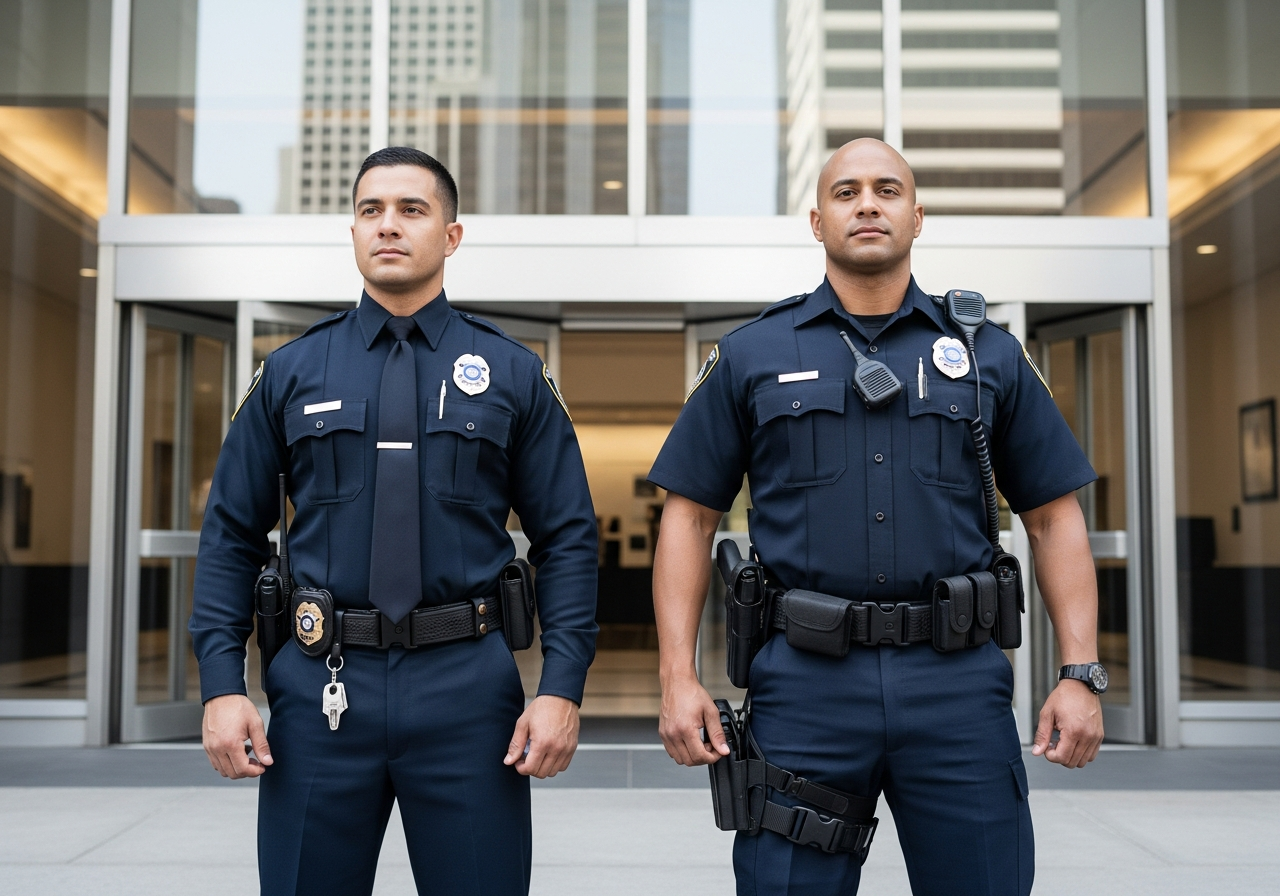
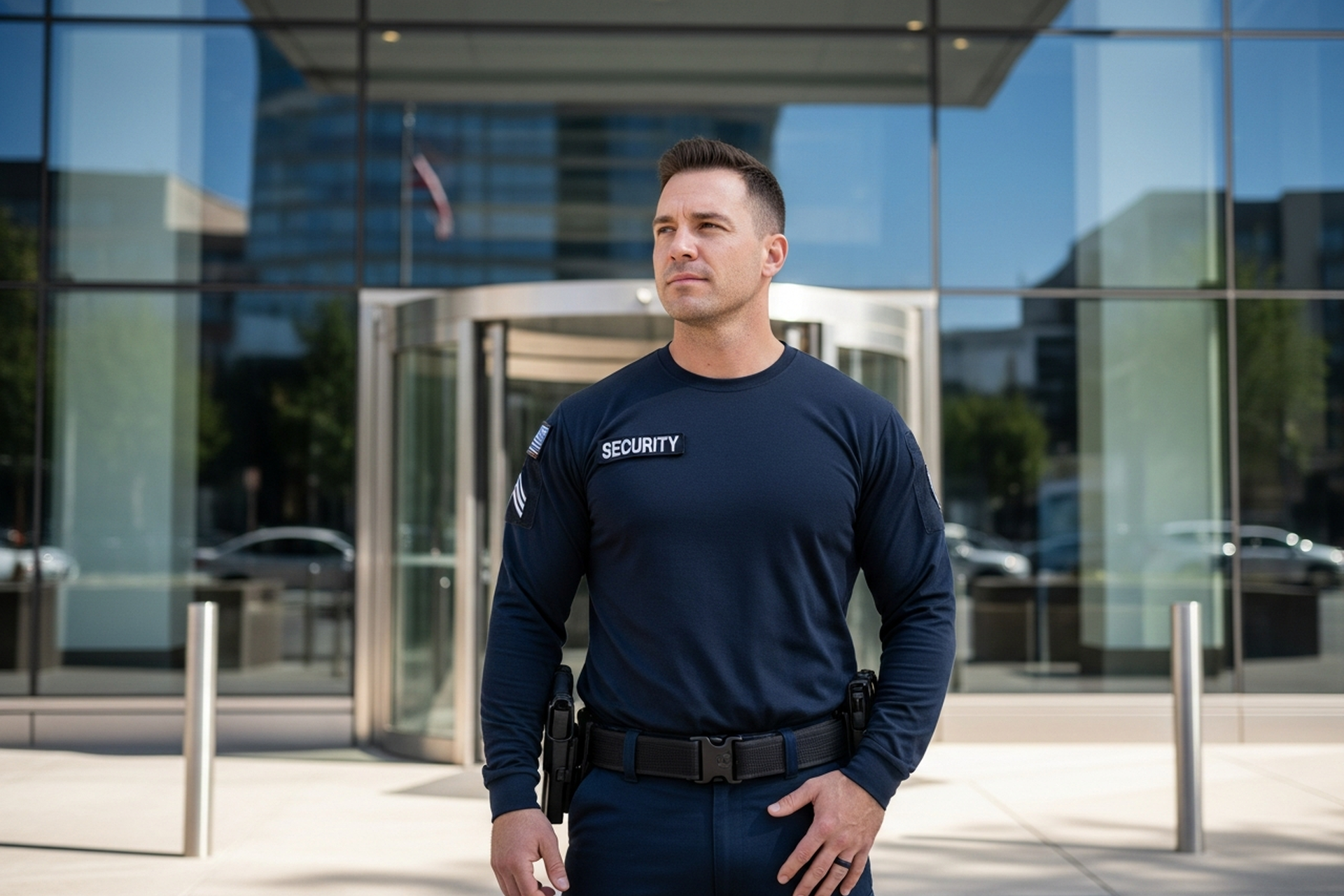
Properties that staff dedicated unarmed guards for visible meeting space and lobby presence, with armed guards reserved for principal-protection or asset-protection posts, give convention services a flexible toolkit without overcommitting.
Group VIP visits and advance work
Most convention contracts include at least one VIP who requires more than a name badge. Keynote speakers, sponsor executives, and senior government attendees move through the property on different schedules and often on short notice.
The advance-work playbook stays consistent across DFW properties:
- Confirm arrival route, vehicle, and timing with the principal's staff or the meeting planner.
- Pre-stage at the loading dock or a discreet entrance when discretion matters.
- Run a walking route from curb to green room to stage, including elevator hold positions.
- Brief the on-duty hotel team on radio handoffs so housekeeping or banquet staff do not cross a held space.
For high-profile keynotes or politically exposed attendees, supplementing contract security with off-duty law enforcement is a common request from convention sales. The visible police presence reassures the planner and adds credentialed authority that contract officers, by design, do not carry.
Meeting space and exhibit area security
Exhibit halls and large meeting spaces concentrate the property's risk into a few rooms. The exhibitor load-in window, typically the day before the show opens, is when most theft and damage happen. Crates are open, freight elevators run continuously, third-party labor comes and goes, and the badge system has not locked the room yet.
Effective coverage layers:
- A posted officer at the freight entrance during load-in and load-out, with a check-in log for non-badged labor.
- A roving officer inside the exhibit space overnight, watching display tech, prize giveaways, and high-value demo equipment.
- Badge reader integration at the show floor entrance, tied into the group's registration system.
- Sweep-and-secure at session end, with a written turnover to the overnight team.
For groups that bring sensitive intellectual property, regulated product samples, or contracted production gear, an armed posting on the exhibit hall overnight is the more conservative option.
Room block and group-floor considerations
A 600-room block stacked on three contiguous floors changes the security picture for the tower. Group attendees expect more privacy and access controls than transient guests, and corporate planners often include specific room-block security language in the contract.
Practical room-block elements:
- Floor-restricted elevator access during peak group hours, controlled by the group's RFID key cards.
- A roving officer on group floors during late-evening and overnight, especially during nights with hospitality suites or post-reception activity.
- Coordinated key control with the front desk to prevent reissued keys without verification.
- Hospitality suite coverage if the group is hosting late-night sponsor receptions inside guest rooms.
This is where convention security overlaps cleanly with the property's standing hotels-hospitality coverage program.
Bar, F&B, and reception event coverage
Sponsor receptions, group dinners, and after-hours hospitality events draw the largest crowds of the convention week and the most alcohol service. A 600-person reception that spills from a ballroom into a pre-function lobby is a different security event from the meeting that preceded it.
What works at DFW convention properties:
- A service-side officer at each bar station, in coordination with the F&B captain, to manage refusal calls and intoxicated-guest handoffs.
- A perimeter officer at the room's entrance, checking wristbands or badges against the approved attendee list.
- A floor officer who quietly tracks the room's energy and flags issues to the planner before they escalate.
The goal is not visible enforcement. It is making sure the planner's event ends on time, the right people get into the right room, and nothing leaves with anyone it should not.
Coordinating multiple simultaneous groups
The hardest scheduling problem at a DFW convention hotel is not any single group. It is what happens when three of them overlap.
A working de-confliction model:
- Maintain a single master schedule across all in-house groups, owned by convention services and shared with the security supervisor.
- Pre-identify shared-space risks: lobby crossover, restaurant overflow, valet stack-up.
- Pre-stage extra coverage for overlap windows.
- Coordinate with parking facilities and valet leadership when arrival windows fall within 90 minutes of each other.
This is where temporary or emergency staffing comes in. A property with a regional partner has a known channel for surge coverage.
Texas DPS licensing baseline
Every contract security officer working at a DFW convention hotel must be licensed through the Texas Department of Public Safety Private Security Bureau. The two relevant individual license types for hotel posts are:
- Level II, non-commissioned security officer. Required minimum training for unarmed officers in Texas, roughly six hours of state-mandated coursework. This is the baseline for lobby, meeting space, and exhibit hall posts where a firearm is not part of the assignment.
- Level III, commissioned security officer. Required for armed officers in Texas, a minimum 45-hour course plus firearms qualification. This is the baseline for principal-protection assignments and overnight high-value exhibit posts.
A property running a mixed posture of unarmed lobby coverage and armed exhibit posts during a major show will have officers on both license tiers on shift at the same time. Licensing details are published by the Texas DPS Private Security Bureau.
For program-level guidance on convention and meeting risk, hotels can reference PCMA, which publishes educational resources for convention services and meeting planners, including risk and crisis management coursework used across the industry.
What this means for your DFW convention hotel
If your property anchors group business in Dallas-Fort Worth, the security program needs to scale with the group calendar, not the room count. A property running 60 percent transient and 40 percent group has a fundamentally different operating tempo than one running the opposite mix.
The convention services contract is also a sales tool. Planners increasingly ask about security in the RFP stage, and properties that can answer with a specific staffing model, license-tier breakdown, and pre-event workflow win business that less-prepared competitors lose. For corporate commercial buyers especially, security capability is part of the property's product.
Frequently Asked Questions
Should our convention hotel rely on in-house security or contract coverage during group overlays?
Most DFW convention hotels run a hybrid model: an in-house director of security and a small core team, supplemented by contract officers who flex up during convention weeks. The in-house team owns the building; the contract partner owns the surge.
Do we need off-duty police for high-profile groups, or is contract security enough?
For most groups, contract security is sufficient. For groups with politically exposed attendees, regulated-industry meetings, or principal-tier executives, off-duty law enforcement provides visible authority and direct radio access to local agencies.
How much lead time do we need to plan security for a major group's convention?
Thirty days is a reasonable floor for a large group with VIPs, exhibit space, and multiple receptions. Sixty to ninety days is better for citywide or industry headliner events.
Who handles security for AV, F&B, and exhibit vendors during load-in and load-out?
The hotel's contract security team typically posts at the freight entrance, checks vendor credentials, and maintains a log of non-badged labor. The group's general service contractor runs its own floor managers, but the property's security partner controls the door.
Can one security team cover multiple simultaneous groups in the same property?
Yes, when the staffing plan is built for it. The model that works is a fixed-coverage spine: lobby, meeting concourse, exhibit hall, and group floors, plus floating officers who rotate among groups based on the master event schedule.
If your convention hotel is reworking its security program ahead of the next group cycle, Cascadia Global Security supports DFW properties with licensed officers, off-duty law enforcement, and surge coverage built around the convention calendar. Request a quote at cascadiaglobalsecurity.com/get-a-quote or call (800) 939-1549.