Hotel Guest Safety and Security Services in Dallas
Josh Harris | June 10, 2026
A guest's sense of safety at a Dallas hotel is shaped long before anything goes wrong. It starts at the porte-cochere, carries through the lobby, and meets them again at the bar at midnight. Hotel guest safety in Dallas is not a single post or a single camera; it is a calibrated program that has to feel like hospitality and function like security at the same time. Get the tone wrong, and a quiet property starts to feel either neglected or aggressively policed.
Dallas operators sit in a market with steady business travel, leisure surges around sports and entertainment districts, and a mix of full-service, select-service, and boutique brands competing for review scores. The security program is part of that competition.
Why Dallas Hotel Guest Safety Needs a Calibrated Approach
A hotel is one of the few commercial environments where strangers sleep, drink, work, and store valuables under the same roof, often all night. That mix creates risks a typical office building never sees: intoxicated guests returning at 2 a.m., room-service traffic in service corridors, contract event staff moving through ballrooms, ride-share drivers idling at the entrance, and the occasional non-guest trying to reach guest floors.
Dallas-Fort Worth hotels also serve a mixed audience. A property near the Arts District, at 7 p.m. on a Friday, is hosting business travelers wrapping up calls, a wedding block checking in, and bar patrons who have no room key at all. Each group has a different expectation of what "feels safe" looks like, and a calibrated program adjusts by daypart rather than a single 24-hour template.
Brand standards add another layer. The industry-wide AHLA 5-Star Promise framework raised the floor on employee safety devices and training expectations across participating brands, which has knock-on effects for how the broader guest experience is staffed and supported.
Lobby and Front-of-House Presence
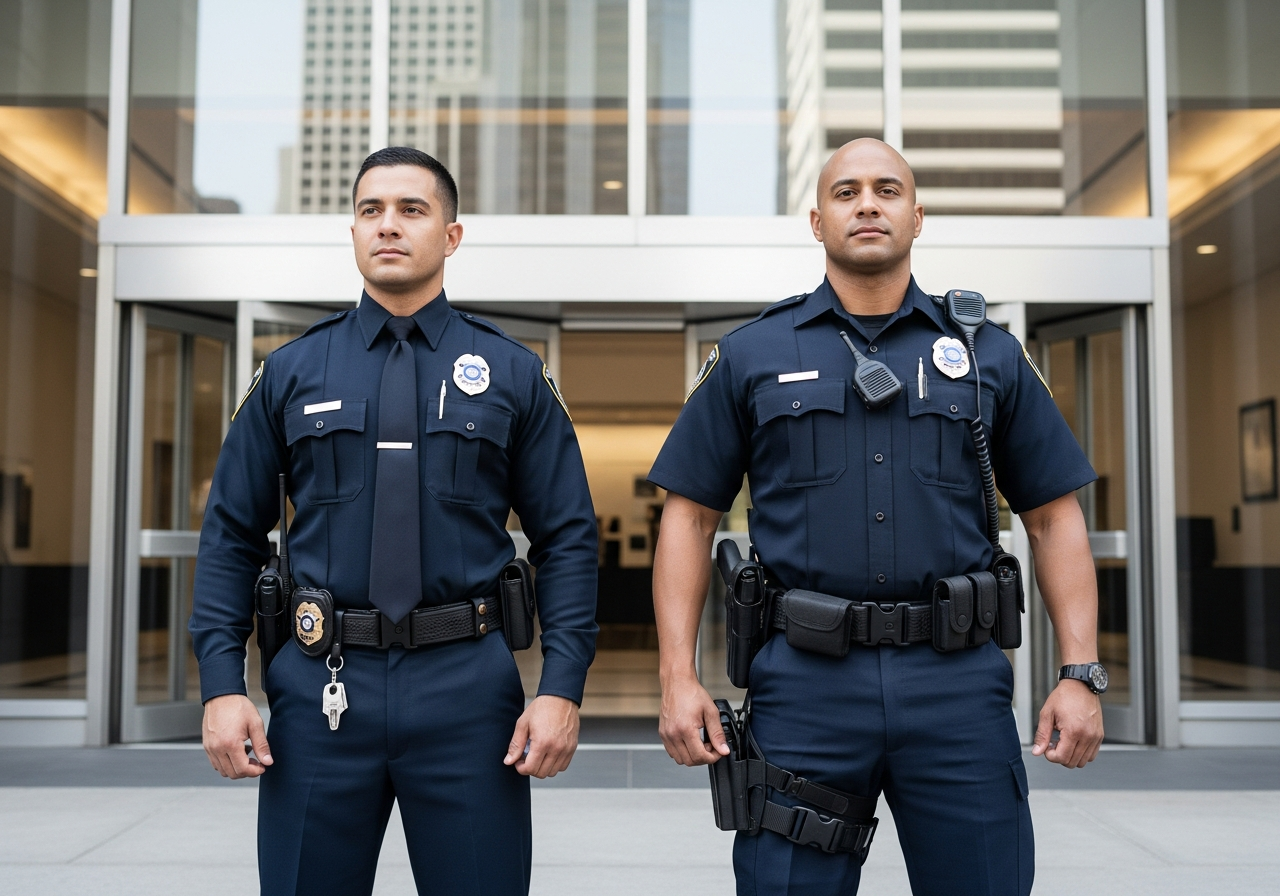
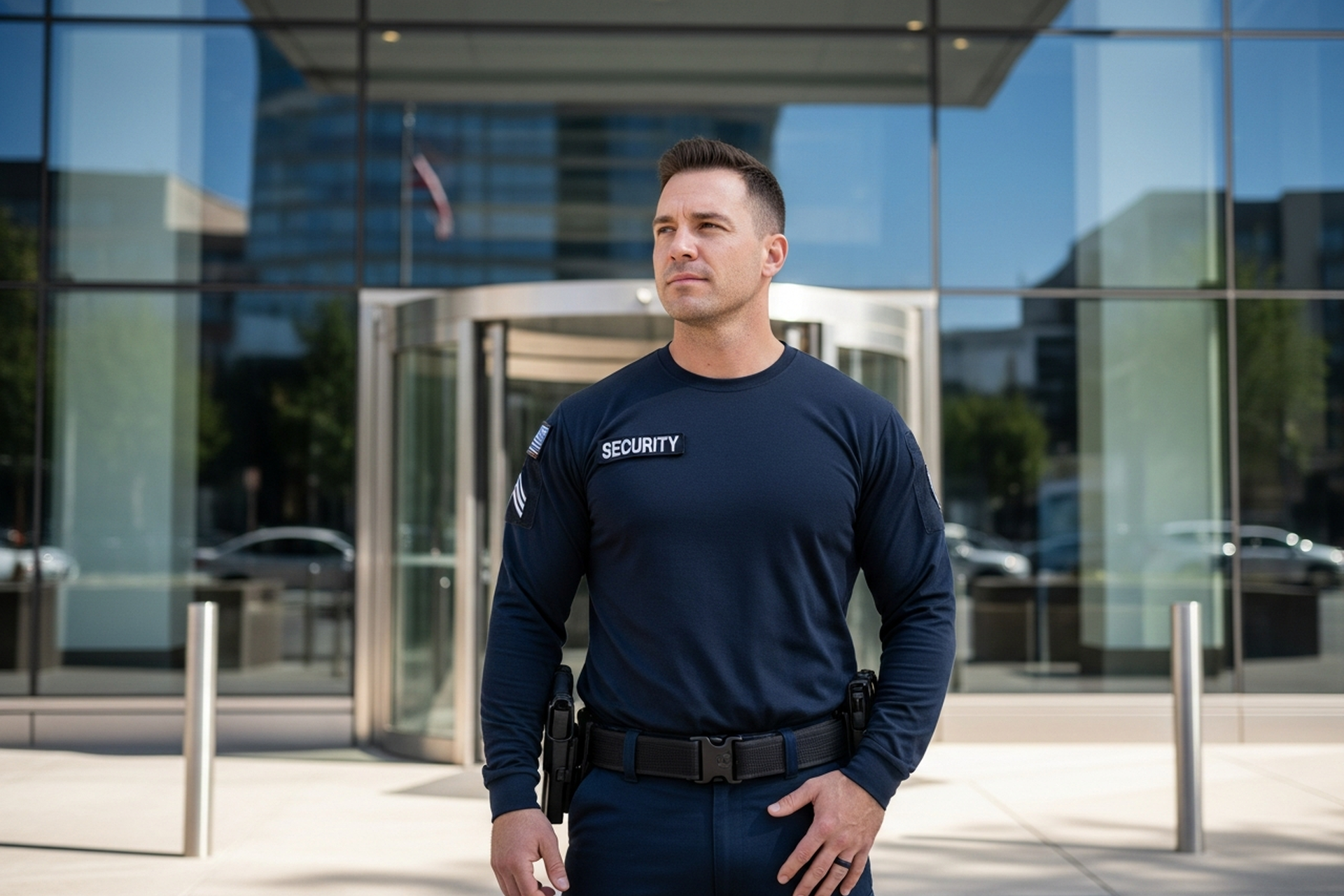
The lobby is the first impression a guest gets of how the building runs. An officer working the lobby in a Dallas hotel should look like part of the hospitality team, not a gate. That means a clean uniform, a posture that invites questions, and a position that covers the front doors, the elevator banks, and the front desk line at the same time.
Operationally, lobby presence does three things at once:
- Deters non-guests from drifting upstairs to guest floors
- Gives the front desk an immediate backup if a check-in escalates
- Provides a visible point of contact for guests who feel uncertain about something they have seen
The right officer handles a noise complaint at 1 a.m. and a lost-room-key question at 9 a.m. with the same composure. That is why hospitality properties lean heavily on unarmed guards for lobby and front-of-house work. The job is presence and judgment, not force.
Parking and Valet Coverage
Parking is where a lot of hotel incidents actually happen. Vehicle break-ins, package theft from open trunks, confrontations between intoxicated guests and valet attendants, and unauthorized access through garage stair towers all show up in incident logs.
A real parking program pairs the valet podium with a posted or roving officer covering the structure, the surface lot, and the perimeter where ride-share pickups cluster. The overlap with broader parking facilities security is direct: lighting, line-of-sight, CCTV placement, and stairwell discipline all carry over. The difference is luggage volume and the predictability of arrival waves around check-in and check-out.
A few patterns work well:
- Officer presence at the valet podium during peak inbound waves
- Roving sweeps of the structure on a randomized cadence, with documented stops
- Coordination with the valet manager on suspicious vehicles, repeat loiterers, and after-hours non-guest entries
After-Hours Bar and Ballroom Support
The bar shift is its own program. Hotel bars in Dallas often stay busy long after the restaurant has closed, pulling in patrons who never booked a room. That changes the security profile after 10 p.m. Cut-off conversations, rideshare escorts, and arguments over a tab sit with the bar team first and the officer second.
The same is true for ballroom and event-overflow nights. When a wedding reception ends at midnight, 200 guests can move through lobby, valet, and guest-room corridors in a 20-minute window. A property staffing a single overnight officer through that window is asking that officer to be in three places at once.
Practical adjustments:
- Tiered staffing that increases during bar peak and tapers as the room clears
- A clear handshake between bar management and the officer on duty about who calls last call and who walks the guest out
- A short post-event sweep of public restrooms, ballroom hallways, and the parking levels closest to the event space
Room Access Incident Response
In-room incidents are the hardest call a hotel officer makes. Disturbance complaints, welfare checks requested by family, a lockout call that turns into a forced-entry decision: each carries real consequences if handled badly.
The right protocol is documented in advance. Who authorizes a forced entry. Who is paged first. How law enforcement is engaged versus simply notified. When the front desk holds further calls so the response is not interrupted. A hotel that invents that protocol on the fly at 3 a.m. usually gets it wrong.
For properties that want a sworn law-enforcement layer on top of contract officers, an off-duty law-enforcement post can be added for specific shifts or events. That is not a default need, but it is a defensible option for high-profile blocks, controversial speakers, or VIP stays where the threat picture justifies it.
Back-of-House Access Control
The loading dock, the employee entrance, the kitchen pass-through to the ballroom prep area: these are the doors guests never see, and the doors most often propped open. A back-of-house access control program does the unglamorous work of keeping that boundary real.
That looks like badged employee entry with a posted check during shift changes, vendor and contractor sign-in at the loading dock with escort requirements above a defined risk threshold, periodic walks to catch propped doors before they become a habit, and camera coverage that actually gets reviewed.
This is where the program ties back into the broader hotels and hospitality operating model. Front-of-house presence without back-of-house discipline is a half-program. A non-guest who cannot get past the lobby will try the dock if it is unattended.
Officer Fitness for Hospitality Work
Not every licensed officer is suited for a hotel. Hospitality work pulls heavily on demeanor, language, and the ability to de-escalate. A guest who has had four drinks and lost a room key needs to be walked to the front desk, not lectured. A wedding guest who wandered into a service corridor needs a polite redirect, not a confrontation.
When Cascadia staffs hospitality posts in Dallas, fit matters as much as license: has this officer worked guest-facing posts before, how do they handle language barriers and intoxicated-guest scenarios, and can they hold a friendly conversation at the lobby door while still reading the room. That is the same lens corporate and commercial properties use for tenant-facing concierge security, and it transfers cleanly into a hotel.
Texas DPS Licensing Baseline
Any contract officer working a Dallas hotel is licensed through the Texas Department of Public Safety Private Security program. The Texas DPS program sets two relevant baselines:
- Level II non-commissioned (unarmed) officers complete a 6-hour state-approved course. This is the standard credential for the typical Dallas hotel lobby, valet, or back-of-house post.
- Level III commissioned (armed) officers complete a 45-hour course plus firearms qualification. Armed posts at upscale or full-service hotels are a deliberate choice based on threat profile.
A reputable provider documents licensure at the officer level and can produce training records on request. If a GM cannot get a roster with credentials from their current vendor, that is a process gap.
What This Means for Your Dallas Hotel
For most Dallas operators, the real question is not whether to have security on property, but whether the current program is tuned to how the building actually runs. A property staffing a single overnight officer because that is what it did last year is almost certainly under-covered during bar peak, event load-out, and shoulder-season weekends.
A practical review looks at four things: where incidents have occurred in the last 12 months, where guest complaints cluster in review data, where the property is exposed during peak dayparts, and where brand-standard requirements are not being met. Most properties find at least one daypart where coverage and risk are out of sync, and the fix is usually a schedule change before a headcount change.
Frequently Asked Questions
Should brand-mandated security be handled in-house or through a contract provider?
Most Dallas full-service and select-service hotels use a contract provider for the officer line, with hotel management owning policy and incident review. Contract staffing absorbs scheduling, licensing, turnover, and training overhead while leaving brand-standard decisions with ownership. In-house teams are more common at very large luxury properties where volume justifies a dedicated department.
When is an armed officer appropriate at an upscale Dallas hotel?
Most upscale Dallas hotels run unarmed lobby and valet presence as the default. Armed officers are added for specific reasons: a sustained threat picture, a particular VIP block, a controversial event, or an unusual exposure profile. The decision should be a documented risk call, not a brand-image preference. In hospitality settings, armed guards are a tool for specific conditions, not a default upgrade.
How does the security officer coordinate with valet at peak inbound?
The valet podium handles vehicle handoff and guest greeting; the officer handles vehicle observation, perimeter awareness, and any non-guest activity around the porte-cochere. During peak waves, the officer holds position; during shoulder hours, they rove the structure. A pre-shift huddle covers VIP arrivals and flags from the previous shift.
Who covers the after-hours bar when the restaurant closes?
In most Dallas hotels, the bar manager runs the floor, and the on-duty officer handles escort and external response. The handshake matters: the officer should know when last call is being called, who is being cut off, and whether any patron is likely to need a rideshare assist out.
When should a hotel add executive protection on top of standard security?
Executive protection is a separate program layered on for a specific principal. Add it when a VIP block, a high-profile speaker, or a corporate principal stays on property and the threat picture warrants close-protection coverage in addition to the standing program.
Talk to Cascadia About Your Hotel's Program
Cascadia Global Security staffs hospitality posts across Dallas-Fort Worth with officers trained for guest-facing work, not just licensed for it. If your property is reviewing coverage or replacing a vendor that has not kept up with the brand standard, we can help. Get a quote or call (800) 939-1549.