Data Center and Server Room Security in the Seattle Metro
Josh Harris | June 14, 2026
The physical security program that protects a data center or enterprise server room operates by a different set of rules than the program that protects a standard office building. The assets inside, computing infrastructure that may anchor financial trading systems, healthcare records, federal cloud workloads, or the operations of hundreds of businesses simultaneously, change the risk equation. The Puget Sound region's growth as a cloud and connectivity market has made data center security in Seattle a discipline with its own protocols, staffing requirements, and audit obligations.
Seattle sits at the convergence of trans-Pacific subsea cable landings, hyperscale cloud workloads, and a corporate technology sector that depends on resilient infrastructure. The facilities that house that infrastructure, whether downtown carrier hotels, suburban colocation campuses, or enterprise server rooms inside corporate headquarters, need physical security programs that understand how these environments actually operate.
Why the Seattle metro has its own data center profile
The downtown Seattle market is anchored by carrier hotels and interconnection facilities concentrated in the Westlake, Pioneer Square, and South Lake Union corridors. These buildings hold cross-connects that feed financial services, cloud providers, content delivery networks, and the international traffic arriving from Pacific cable landings. The density of compute and connectivity in a single floor of one of these buildings is unlike anything in a conventional commercial property.
The Eastside, particularly the corridor running through Bellevue, Redmond, and Sammamish, adds enterprise data centers and significant on-premise server rooms inside corporate technology campuses. The Puget Sound region's hyperscale cloud presence extends further out into Quincy and the Columbia Basin, but the metro-area facilities serving downtown Seattle and the Eastside represent the immediate physical security demand for officers, escorts, and lobby coverage.
Colocation campuses in Tukwila, Kent, and the Green River Valley round out the regional picture. These suburban sites trade the downtown density profile for larger footprints, vehicle access challenges, and proximity to freight corridors that change the perimeter security calculus considerably. A program that works for a 30-story carrier hotel will not transfer cleanly to a single-story Kent Valley colo without adjustment.
The threat profile that shapes data center security in Seattle
The threats that drive data center physical security are different from the threats that drive standard commercial building security, and they justify the specialized officer programs that operate in these facilities.
Insider threat sits at the top of the list. The individuals with authorized access, employees, vendors, contractors, and tenant personnel, represent the largest physical security exposure. Badge cloning, shared credentials, and access permissions that accumulate beyond actual job needs are recurring vulnerabilities. Officer programs help by enforcing visitor and vendor logging that makes access audits meaningful in the first place.
Targeted physical intrusion is rare but consequential. An actor with advance knowledge of the layout can attempt entry through vendor impersonation, social engineering at the lobby desk, badge tailgating, or exploitation of shift-change routines. The human element of intrusion is exactly why the officer layer cannot be replaced by automation alone.
Vendor and contractor access abuse is the operational reality of every working data center. Hardware swaps, cabling, cooling maintenance, and fire-suppression inspections happen continuously, and every one of those visits is an opportunity for unauthorized observation or unauthorized hardware movement. Escort protocols, time-limited access windows, and pre-registration are the standard controls.
Tailgating at mantraps is a quieter but persistent problem. The mantrap is only as effective as the officer or interlock system enforcing it. A mantrap left unattended during a busy maintenance window becomes a friction point, not a control.
Hardware theft and intellectual property exposure round out the list. Servers, drives, and components carry real resale value, and in a colocation environment hundreds of organizations' hardware coexists on a single floor. In an enterprise server room, the racks may hold prototyping environments, code repositories, and proprietary data that competitors or foreign intelligence services may target through physical means.
The layered security model
Effective data center physical security operates across concentric layers, each designed to slow, detect, and stop unauthorized access before it reaches sensitive infrastructure.
The perimeter is the outer boundary. Anti-climb fencing where applicable, controlled vehicle access with barriers where warranted, and continuous CCTV coverage establish a baseline. For suburban colocation campuses in Tukwila and the Kent Valley, mobile patrol coverage supplements fixed cameras with physical presence, especially overnight and on weekends when the building lobby is staffed lightly or not at all.
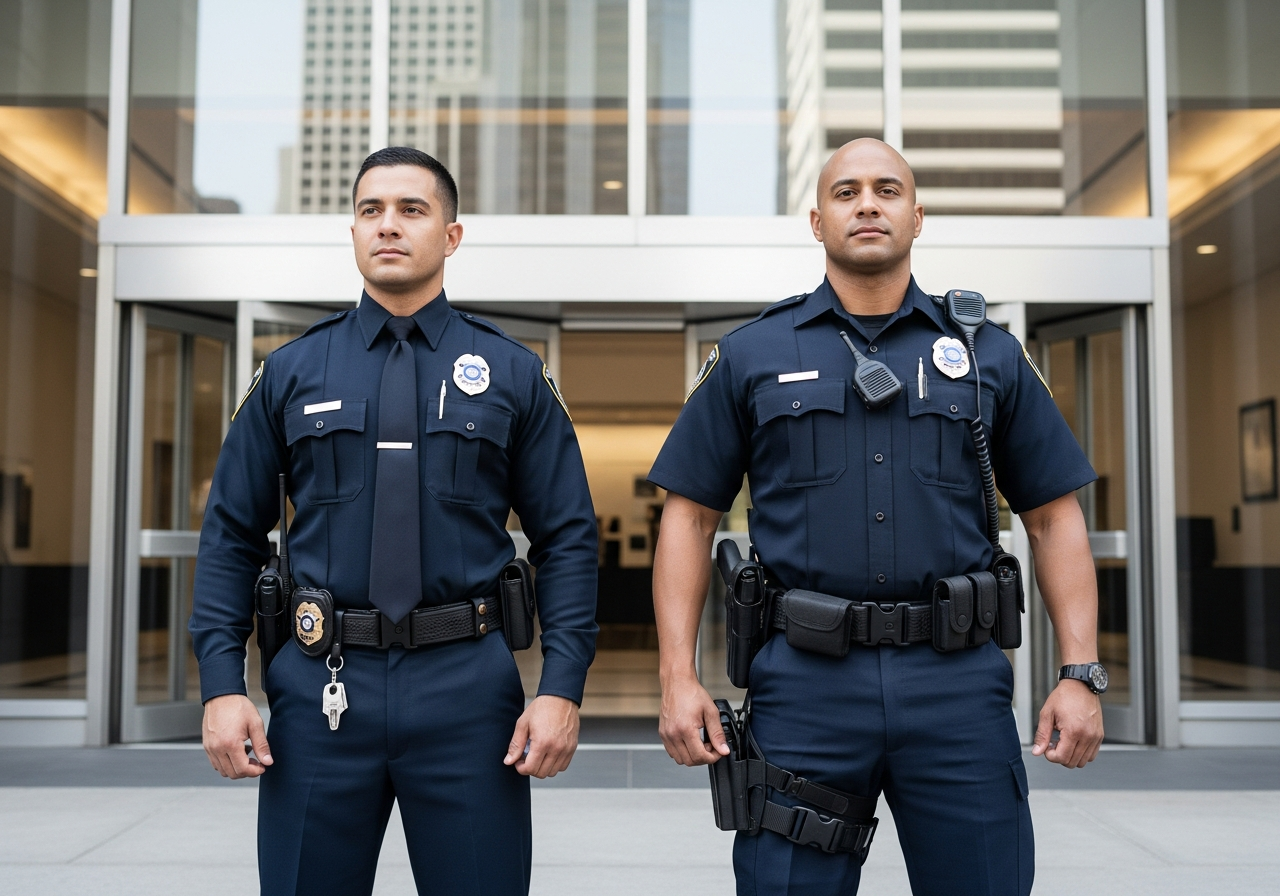
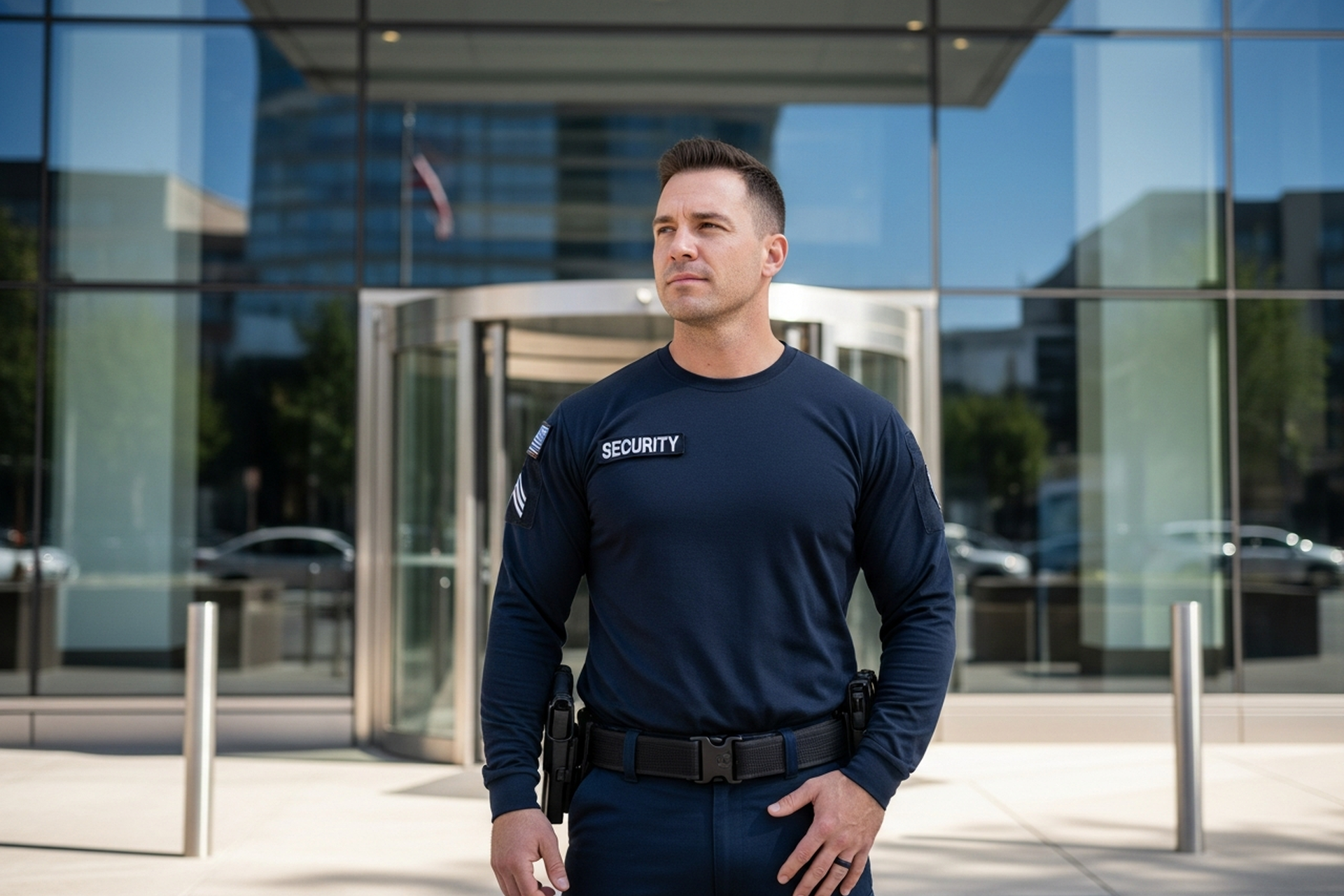
The lobby and single-point-of-entry is the most important human layer in the data center model. Every visitor, vendor, and contractor enters through a single controlled point. The unarmed security officer at that entry handles pre-registration verification, photo ID check, time-limited badge issuance, and escort coordination for any vendor requiring floor access. This is not a passive role. It is the primary control point for the entire facility, and the quality of the officer staffed there shapes the security posture of everything behind them.
Mantrap and interlocked door control extends the lobby authority deeper into the building. Access from the lobby to the raised floor, cage areas, and server rooms typically passes through a mantrap sequence. Biometric verification, whether palm vein, iris, or fingerprint, layered with a proximity badge and a PIN, creates a multi-factor requirement that is far harder to circumvent than any single control. Industry groups like 7x24 Exchange International, which convenes mission-critical infrastructure professionals around end-to-end reliability, treat multi-factor physical access control as a baseline expectation rather than an upgrade.
Cage and tenant-specific access addresses the colocation reality. Individual tenants lease cage space within a broader facility, and authorized tenant personnel may have access to the shared lobby and raised floor but not to other tenants' cage areas. Managing that layer-within-a-layer requires access lists maintained per tenant, audited regularly, and coordinated between the facility security program and each tenant's own IT security team.
Escorted vendor access keeps the floor accountable. Every contractor who enters the raised floor in a well-run data center is escorted. The escort accompanies the vendor from entry to exit, documents what was done, and ensures no unauthorized hardware leaves the premises.
Visitor logging and continuous audit trail closes the loop. Pre-registration is standard in any data center holding compliance certifications. Visitors are registered in advance, photographed at entry, issued a badge with floor authorization and an expiration timestamp, and logged out on departure. The audit trail is not just a security artifact. It is a compliance deliverable.
NOC and SOC integration ties physical events into infrastructure monitoring. Most large data centers operate a Network Operations Center or a joint NOC and SOC that monitors infrastructure health and security events simultaneously. Door-held-open conditions, alarm events, and CCTV alerts get handled by a coordinated team rather than across organizational silos.
Colocation, enterprise, and edge: different models
The right security program depends on which kind of facility is being protected.
In a colocation facility, multiple tenants share the building. The facility operator controls perimeter and common-area security while individual tenant cage areas require tenant-specific access controls layered on top of the baseline. The security program has to account for tenant diversity, since a healthcare SaaS tenant caged next to a financial services firm and a federal contractor all carry different compliance obligations that the facility's logs and procedures must support.
An enterprise data center or large in-house server room operates as a single-tenant environment. The perimeter may be smaller, but the IP concentration is higher in many cases, and officer programs in these environments often include background screening requirements that go beyond standard commercial security contracts.
Corporate technology campuses on the Eastside often include significant server rooms inside otherwise standard office buildings. The corporate commercial security program for these sites has to balance the accessibility expectations of a collaborative office environment against the IP protection requirements of the sensitive functions happening inside the locked rooms behind the open lobby.
Compliance frameworks and how the officer program supports them
Data centers holding certifications under major frameworks carry specific physical security obligations that the officer program directly supports.
SOC 2 Type II Common Criteria 6 requires documented logical and physical access controls. The officer program's visitor logs, escort documentation, and access control audit trails become evidence reviewed during a SOC 2 examination.
ISO 27001 Annex A.7 and A.11 addresses physical security across facilities, visitor management processes, and secure area access restrictions. The A.11 controls map directly onto the mantrap, escort, and visitor badging workflows that the officer program runs day to day.
PCI-DSS Requirement 9 mandates physical access controls for cardholder data environments, visitor logs, and badge usage records. Any data center or server room hosting payment processing infrastructure is subject to these requirements, and the officer program's documentation is reviewed during PCI assessments.
HIPAA Physical Safeguards apply where healthcare cloud or healthcare-adjacent customers are hosted. The facility operator's officer program and access logs become part of the business associate documentation chain. FedRAMP physical security controls govern facilities serving federal cloud workloads, with requirements more prescriptive than standard commercial frameworks.
AFCOM, the professional association for data center infrastructure professionals, publishes guidance on the intersection of operational and security requirements in mission-critical facilities. That guidance is standard reference material for Seattle metro operators pursuing or maintaining certification.
Fire suppression awareness and operational coordination
Data center officers do not operate fire suppression systems, but they do need a working awareness of how those systems behave during a real event. Inert gas suppression systems, common in server rooms, may trigger evacuation alarms and pressure relief venting that change the building's acoustic and visual environment quickly. An officer who understands what is happening can keep occupants calm, coordinate orderly egress, and serve as the on-scene contact for arriving fire crews. That coordination only works when officers have been briefed on the suppression system in their specific facility, which is part of orientation in any well-run program.
Vendor vetting and officer qualifications
Officers assigned to data center lobbies and escort functions benefit from familiarity with the physical environment, recognizing that a cage door held open longer than expected is an anomaly, noticing when a contractor's explanation does not match the work order documentation, and knowing which vendors are scheduled versus which arrived unannounced. That contextual awareness is built through facility orientation, not assumed on arrival.
Background screening for data center assignments typically goes beyond a standard criminal history check. Depending on the tenant profile and compliance framework, it may include credit history, previous employer verification, and federal suitability determinations for facilities hosting government workloads. Non-disclosure agreements covering what officers observe during tenant tours are common.
For Seattle metro facilities sitting inside broader industrial or office environments, the officer program may also tie into visitor management at the building's main lobby. The same standards that drive visitor management for downtown corporate offices apply, with additional protocols layered on at the server room door.
What this means for Seattle metro operators
Data centers, colocation facilities, and enterprise server rooms across the Seattle metro share more in common with each other than they share with conventional commercial buildings. The threat profile, compliance obligations, and operational rhythm justify a security program that is built around the realities of mission-critical infrastructure rather than retrofitted from a generic guard contract. That program starts with officer selection, continues through facility-specific orientation, and is reinforced by documentation that meets audit standards from day one.
Cascadia Global Security supports data center, colocation, and enterprise server room programs across the Seattle metro and Puget Sound region. Programs are built around facility-specific orientation, compliance-aware documentation, and officer staffing matched to the operational profile of each site. To discuss a program for your facility, request a quote or call (800) 939-1549.
Frequently Asked Questions
What makes data center security different from standard commercial building security?
Data centers concentrate computing infrastructure that supports financial systems, healthcare records, and cloud workloads for hundreds of organizations. The threat profile centers on insider abuse, targeted physical intrusion, vendor access misuse, and tailgating at mantraps. The compliance obligations under SOC 2, ISO 27001, PCI-DSS, HIPAA, and FedRAMP add documentation requirements that a standard commercial guard contract does not address.
How does mantrap access control actually work in a Seattle data center?
A mantrap is a small interlocked vestibule between the public lobby and the secure floor area. The first door must close and verify the occupant through biometric and badge factors before the second door unlocks. In a well-run Seattle facility, that sequence is monitored by an officer at the lobby desk who can intervene if a badge fails or a credential anomaly appears. The mantrap is only as effective as the staffing and procedures around it.
What compliance frameworks does a Puget Sound colocation facility usually need to meet?
Most Puget Sound colocation operators maintain SOC 2 Type II and ISO 27001 certifications as a baseline, and many add PCI-DSS where payment processing tenants are hosted. HIPAA obligations apply where healthcare tenants are present. Facilities serving federal cloud customers may pursue FedRAMP authorization, which carries the most prescriptive physical security requirements of the common frameworks.
Do unarmed officers fit the data center model, or is armed coverage standard?
Unarmed officers are the standard staffing model for data center lobbies, escort functions, and after-hours coverage across the Seattle metro. The work is procedural, documentation-heavy, and centered on access control rather than threat response. Armed coverage is rare and is typically reserved for narrowly defined circumstances driven by specific tenant requirements or current threat assessments.
How should an Eastside tech campus think about server room security inside an otherwise open office?
The server room inside a Bellevue or Redmond corporate campus needs a security layer that is meaningfully separate from the open office around it. That usually means controlled access at the server room door with multi-factor authentication, a separate access list maintained by the IT or facilities team, vendor escort whenever maintenance happens, and a documentation workflow that mirrors what a standalone data center would maintain. The accessibility of the broader office should not extend into the rack room.