Visitor Management and Lobby Security for Seattle Offices
Josh Harris | May 30, 2026
The lobby is the first impression a corporate office makes on every client, partner, and candidate who walks through the door. In Seattle, where Class A office buildings in South Lake Union, downtown, and the Eastside host dense concentrations of technology, professional services, and financial tenants, that front door is also the most consequential security boundary in the building. Visitor management for Seattle corporate offices requires more than a sign-in sheet. It requires a program.
Gaps in lobby security create risks that are difficult to reverse. An unescorted visitor who gains access to a restricted floor, a vendor without current credentials who wanders into a server room, or a terminated employee who still appears on the building access list are problems that manifest before anyone realizes something went wrong. The best time to close those gaps is before an incident, not after.
Why the lobby is the front line of office security
Every building has a perimeter, but in a multi-tenant Class A tower, the lobby is where that perimeter is actively enforced. Elevators go everywhere. A visitor who clears the lobby without being properly logged and badged can reach any floor that lacks additional access controls.
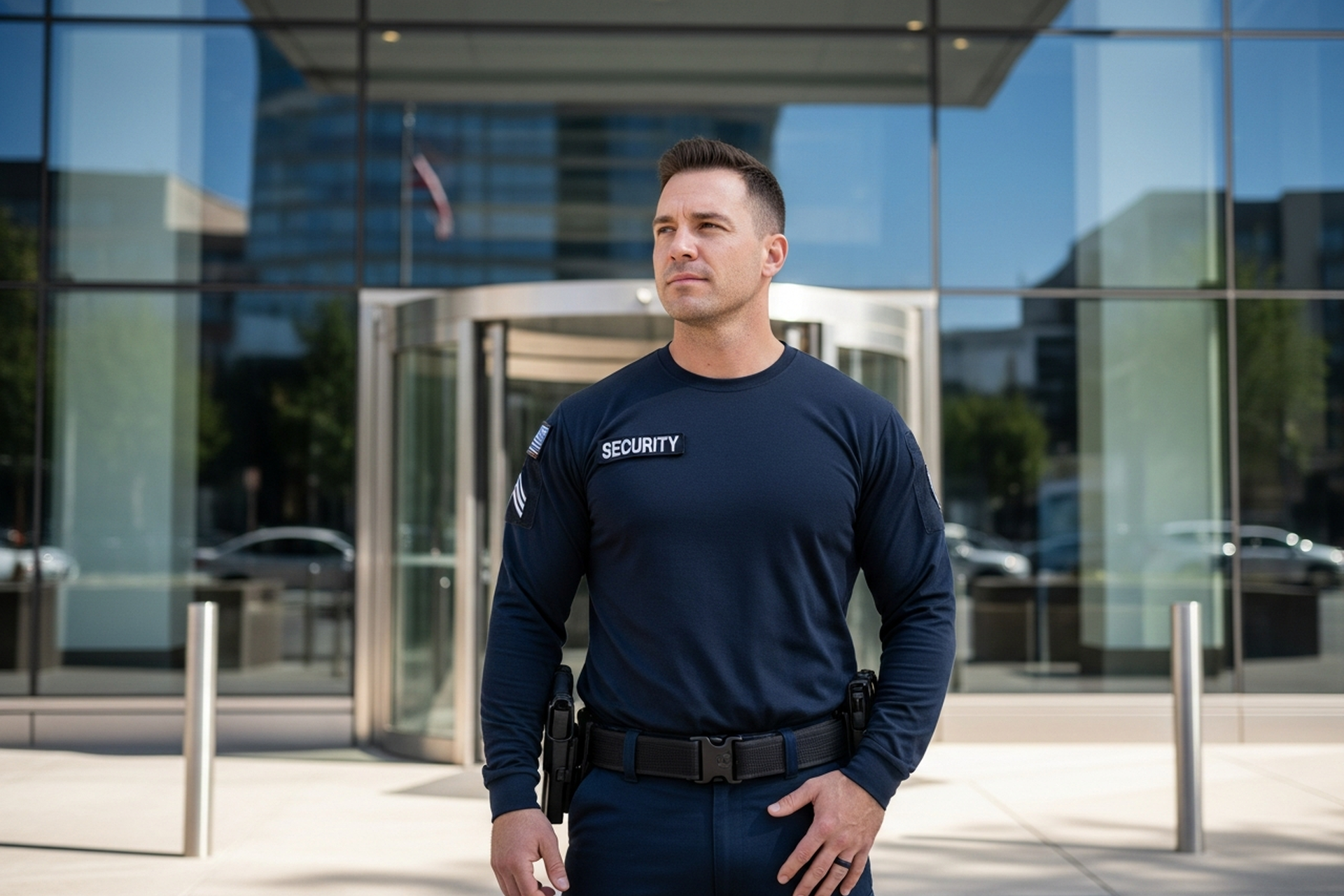
Lobby security serves two functions simultaneously. From a security standpoint, it controls physical access, creates a verifiable record of who entered the building and when, and provides a visible deterrent to anyone considering unauthorized entry. From a tenant-experience standpoint, a professional, efficient lobby creates a first impression that reflects directly on the occupying company. Tenants in competitive leasing markets notice when a building's security operation is disorganized, slow, or unfriendly. The lobby is not just a gatehouse. It is the threshold between the public and the private.
IFMA, the International Facility Management Association, frames visitor access management as a core facility management function, one that intersects space management, security, compliance, and tenant services in ways that require deliberate coordination rather than improvised procedure.
Multi-tenant buildings introduce additional complexity. Each tenant may have separate access policies, separate HR systems, and separate NDA requirements for their visitors. A lobby security program that works for a 30-person professional services firm may not work for a 500-person technology company on a different floor of the same tower. Building operators and tenant security teams need clear protocols that distinguish between building-wide controls and tenant-specific requirements.
Visitor management: pre-registration versus walk-in
Modern lobby security separates two categories of visitors with meaningfully different risk profiles: those who are expected and pre-registered, and those who arrive without prior notice.
Pre-registered visitors are the lower-risk group. Before arrival, their name, affiliation, and purpose of visit have been confirmed by a host employee. Digital visitor management platforms (the category includes solutions like Envoy, iLobby, and SwipedOn) allow companies to pre-enroll visitors, send them arrival instructions, and even complete NDA acknowledgments before they reach the building. When a pre-registered visitor arrives, the check-in process can be fast and frictionless, a QR scan or a brief ID check, because the verification work was done in advance.
Walk-in visitors require more attention. Someone arriving without a pre-logged appointment must be verified against a host employee who can be contacted in real time. The lobby officer's role here is to confirm the visit is legitimate, verify the visitor's identity, and hold them at the lobby level until the host arrives or approves access. Allowing unescorted walk-ins to proceed to the elevator bank without a completed check-in is a common gap that skilled social engineers exploit.
The combination of a digital visitor management platform and a trained lobby officer produces stronger results than either alone. The platform creates a record. The officer creates accountability.
ID verification and badge issuance
Identity verification is the foundation of any functional visitor management program. Every visitor who enters a tenant floor should present a government-issued ID at check-in. The lobby officer captures the name, confirms it against the pre-registration record, and issues a badge. An effective visitor badge displays the visitor's name, the date, and the floor or area approved for that visit. Time-limited credentials prevent a badge from yesterday from being used today.
Floor-restricted credentials are particularly important in multi-tenant buildings. A vendor visiting the IT department should not have physical access to the executive suite. Badge systems linked to elevator controls or turnstiles enforce these restrictions at the hardware level, removing the burden from lobby staff to catch a misdirected visitor after the fact.
IREM, the Institute of Real Estate Management, recognizes visitor access policies as a component of responsible building operations, one that property managers are increasingly expected to document and enforce as a standard of care for their tenants.
NDA workflows for sensitive visits
Technology companies, law firms, financial institutions, and pharmaceutical tenants often require visitors to sign a non-disclosure agreement before entering certain spaces. Digital visitor platforms can route NDA signature requests to visitors ahead of their arrival, capturing a timestamped acknowledgment before the check-in begins. For walk-in visits that require an NDA, the lobby officer should direct the visitor to a waiting area where paperwork is completed before access is granted. Skipping this step under time pressure is how sensitive conversations and restricted spaces become exposed.
The lobby officer's role in NDA enforcement is procedural, not legal. Their job is to ensure the workflow runs: the form is presented, completed, and filed before the visitor proceeds.
Vendor and contractor management
Vendors and contractors present a distinct access control challenge. Unlike one-time visitors, cleaning crews, HVAC technicians, and IT hardware vendors often have recurring access with credentials that may not have been reviewed in months or years.
An effective visitor management program maintains a vendor registry that logs active vendor relationships, the areas each vendor is authorized to access, and the expiration dates of their credentials. When a vendor arrives, the lobby officer checks them against this registry. If their contract has lapsed or their authorized area has changed, the issue is addressed before they enter rather than after. Deliveries in downtown Seattle and South Lake Union increasingly go through a designated receiving area rather than the main lobby, keeping the lobby clear and maintaining a clean chain of custody for incoming packages.
Coordinating with tenant security teams
In multi-tenant buildings, lobby security is a shared responsibility. The building operator manages the lobby-level controls. Individual tenants manage access within their own leased space. These two programs need to communicate to be effective.
Tenant security teams should be able to update lobby pre-registration lists quickly when an employee leaves or a visitor relationship changes. The building's lobby officer should have a clear escalation path to each tenant's security or facilities contact when a situation requires judgment beyond standard procedure. Incident logs should be accessible to both building management and affected tenants.
Cascadia Global Security works with corporate and commercial properties across the Seattle metro, providing trained lobby officers who understand both the building-level protocols and the tenant-specific requirements that make a multi-tenant program function.
Lobby officer training and service posture
A lobby officer who is present but undertrained is not meaningfully better than no lobby officer at all. The position requires a specific skill set: the ability to be hospitable and firm at the same time, to ask for credentials without making legitimate visitors feel like suspects, and to de-escalate a situation when someone becomes agitated about the check-in process.
Training for lobby officers in a corporate office environment covers access control procedures, visitor registration workflows, emergency protocols, and communication standards. The service posture is intentional: a lobby officer who greets visitors warmly, processes check-ins efficiently, and maintains clear situational awareness creates an environment where both legitimate visitors and security standards are well served.
Unarmed security officers are the right fit for most corporate lobby environments. For the majority of professional office environments in Seattle, the combination of trained unarmed officers, a functional visitor management platform, and sound access control procedures is the appropriate model.
What makes Seattle's corporate market distinct
Commercial office buildings across downtown Seattle, South Lake Union, and Belltown draw tenants with very different operational profiles. A technology company has different visitor volumes and visitor types than a law firm or a financial advisory group. Multi-tenant towers need lobby programs that are flexible enough to serve all of them without becoming so complex that the lobby officer cannot execute them reliably.
The Seattle commercial building security checklist for property managers that many operators use as a baseline includes lobby protocols as a core element. A review that reveals gaps in visitor badging or vendor credential tracking is a useful finding precisely because those gaps can be closed before they produce an incident.
Frequently Asked Questions
What is a visitor management system and do Seattle offices need one?
A visitor management system is a digital platform that pre-registers expected visitors, captures ID information at check-in, issues time-stamped badges, and maintains an auditable log of all lobby entries. Seattle corporate offices in multi-tenant Class A buildings or those hosting sensitive client meetings benefit significantly from a formal system. A sign-in sheet creates a record but does not verify identity, issue access credentials, or flag unauthorized entries. As tenant expectations rise, documented visitor management protocols have become a baseline requirement rather than a premium feature.
How does pre-registration improve lobby security?
Pre-registration shifts the verification work out of the lobby and into the period before the visit begins. When a visitor's name, affiliation, and purpose are confirmed in advance, the check-in process becomes faster and more reliable. Any visitor who arrives without a pre-registration record is immediately flagged for additional verification rather than allowed to proceed. Pre-registration also enables NDA delivery before arrival, so business meetings are not delayed by paperwork at the front desk.
What credentials do lobby security officers need in Washington?
Security officers working in Washington state must hold a valid unarmed security guard license issued by the Washington State Department of Licensing. The licensing process includes a background check, fingerprinting, and completion of required training hours. Officers who work in environments requiring armed coverage must also complete the additional certification process administered by the Washington State Criminal Justice Training Commission. For corporate lobby environments, unarmed licensing is the standard credential, and employers should verify that all stationed officers hold current and unencumbered licenses before deployment.
How should multi-tenant buildings handle visitor management across different tenants?
In a multi-tenant building, visitor management typically operates on two levels: building-wide controls managed by the operator and tenant-specific protocols managed by each occupying company. The lobby-level check-in should capture all visitor entries regardless of which tenant they are visiting. Tenant-specific requirements, such as NDA signatures or floor-restricted badge access, are layered on top of the building baseline. The most effective programs establish a clear communication channel between the building's lobby officer team and each tenant's facilities or security contact, so pre-registration lists can be updated promptly and escalation paths are known before a situation requires them.
When should a corporate office consider after-hours lobby coverage?
An office that operates beyond standard business hours, hosts client events in the evening, or occupies a building with shared after-hours access from other tenants should consider dedicated lobby coverage during those periods. The same visitor management protocols that apply during the day should apply in the evening. A building with no lobby presence after 6 p.m. but a loading dock that remains accessible, or a lobby that is open for evening events without a trained officer present, creates a significant gap. After-hours lobby coverage also connects directly to the building's after-hours office building security program, ensuring that physical access control remains consistent from morning through close.
Cascadia Global Security provides trained lobby officers and visitor management support for corporate and commercial properties across the Seattle market. Whether you are building a lobby security program from the ground up or evaluating the gaps in your current operation, we can help you put the right people and procedures in place.
Contact us for a customized assessment: Get a Quote or call (800) 939-1549.